Retiring teacher, coach urges Colony grads to ‘find their 68’
By Jeremiah Bartz Frontiersman.com A football coach using a hockey reference as the centerpiece for his keynote address may


A little over 100 years ago, women secured the right to vote with the 19th Amendment. A few years later, Jeanette Rankin was the first woman to be sworn into Congress in April 1917. Since that time, the country has seen women rise into various roles of political leadership, up to and including the current Vice President, Kamala Harris.
Alaska has been at the forefront when it comes to women in politics, from the first territory to grant women the right to vote to Sarah Palin’s selection to be the Vice President during John McCain’s Presidential run in 2008, to U.S. Senator Lisa Murkowski, the second most senior Republican female in the Senate today.
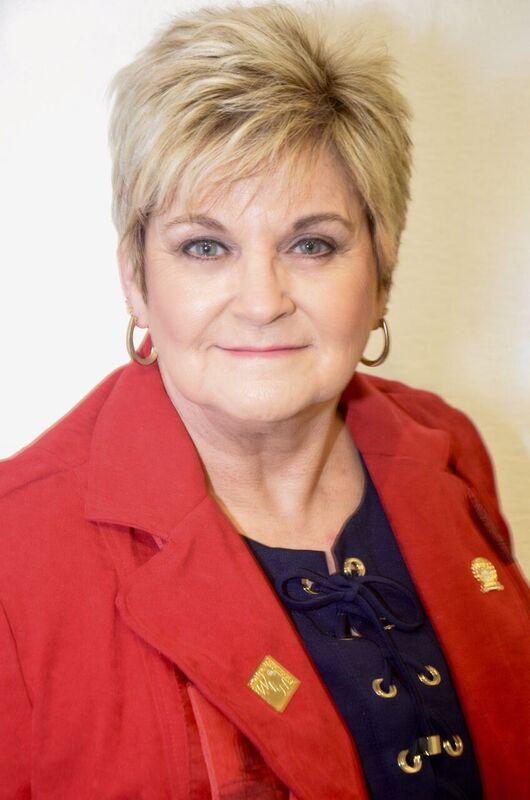
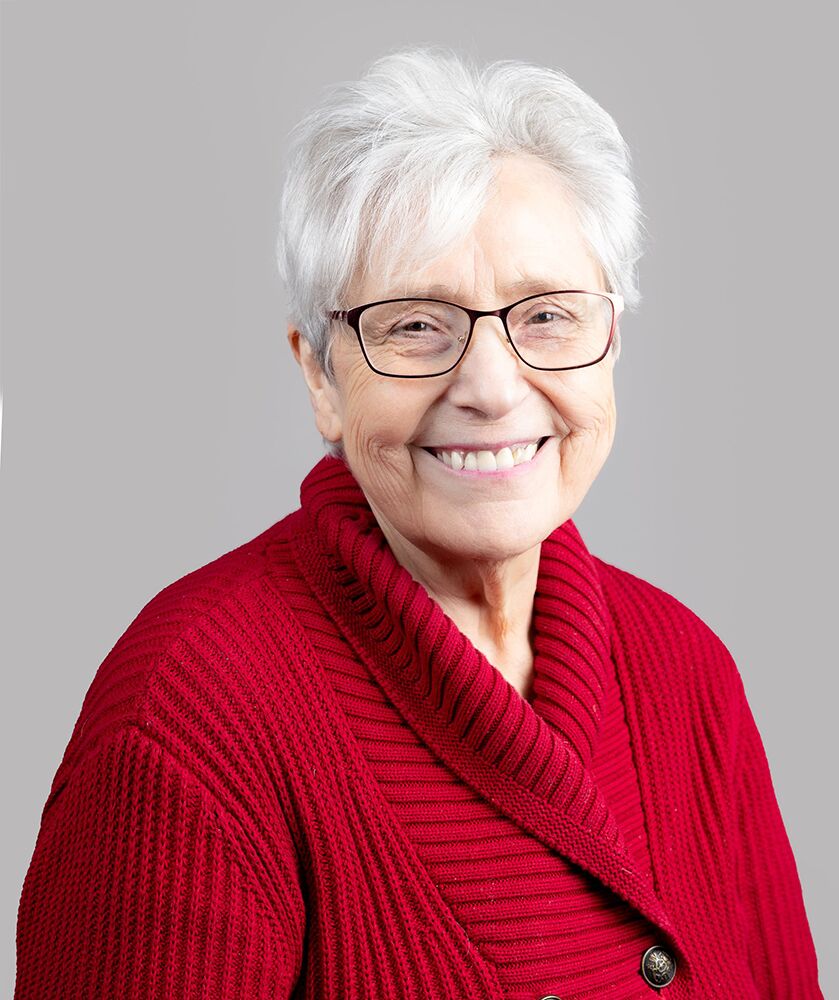
In the Mat-Su Borough, three of the four mayors in office today are women, a truly historic moment for the Borough. In honor of Women’s History Month, Mayor Virgie Thompson, Mayor Glenda Ledford, and Mayor Edna Devries all took time to speak about their roles as mayor and the role of women in politics.
After meeting with these women individually, there is definitely a common trait that all three bring to the role of mayor-fostering a nurturing and compassionate environment around themselves and their office. That isn’t to say that they are shrinking violets. Rather, these three women are the very epitome of Alaska-tough, hardworking, and leave little room for nonsense. To say that each of these women has experience is an understatement.
First up, longtime city of Houston Mayor Virgie Thompson. Mayor Thompson has been a resident of the town for decades and in 2008, while working as a special education assistant for the Houston Middle school, she decided she had heard enough negativity about the city, the “hard-handed” way things were being done and decided to get involved. Her first task was to learn as much as possible about local government and the responsibilities that come with being on a council in a town with little visibility.
Houston is a small city that sits between Wasilla and Willow, and is often people dismissed it as a place to stop on the way to somewhere else. Many don’t realize the actual size of Houston is 25 miles, nearly double the area of Wasilla. It is classified as a second-class city, which means that the city council nominates and elects its mayor for a one-year term, unlike Wasilla, Palmer, and the Borough, in which the voters decide who will lead.
Quickly, Thompson’s goal became to change the perception of Houston and she was soon sworn in as a Houston Councilmember. In 2010, then-Mayor Roger Purcell was facing a recall vote, but he resigned shortly before the election. Thompson was nominated by the council and became the new Mayor, a role she enjoys 10 years later.
Thompson felt there was a lot to overcome, especially with the reputation of the city, feeling that Houston wasn’t taken seriously in Juneau.
Thompson’s drive to be a part of the community and part of the solution is a sentiment that Wasilla Mayor Glenda Ledford echoes. After moving to Alaska in 1986, she opened a small business in 1990. Later in 2010, she opened her cosmetology school. Not one to rest on her laurels, she became involved with the Wasilla Planning Committee, then the city council and acted as Deputy from 2019 through 2020. All the while, she remained invested in her business serving multiple terms on the Board of Barbers and Hairdressers.
She also served as one of 11 delegates to the Republican National Convention in 2016. She ran for City of Wasilla Mayor in 2020, beating her opponent in a run-off.
Wasilla has seen unprecedented growth, becoming the fastest growing city in Alaska, from an estimated 4000 in 1990 to over 10,000 according to the 2020 census. The rapid growth comes with its own set of growing pains including increased traffic, crime, but also new businesses-both small and franchises from the lower 48. Ledford has also helped in Wasilla’s achievement of being debt-free, paving the way for future projects without worrying about interest rates.
Meanwhile, Mayor Edna DeVries has been involved in her community and Borough politics since the 1980s. After moving to Palmer in 1969, Mayor DeVries became an active member on many state and local boards and commissions. She has worn many hats during her time in Palmer-Treasurer/Finance Director, City Council member from 1979 to 1982; again from 1996 to 1999; and from 2010-2016, before being elected Mayor of Palmer in 2016. She is a former Mat-Su Borough Assembly member, former Mat-Su Borough Mayor, and State Senator. Not content with that, in 2021 she was elected Mayor.
The Mat-Su Borough was incorporated in 1964, not long after Alaska became a state. The sheer size of the Borough is over 25,000 square miles-for comparison, that’s bigger than the entire state of West Virginia. The boundaries don’t end at Palmer, but cover the Butte, Talkeetna, Eureka, Trapper Creek, and many communities nestled in between. With over 100,000 people calling the Borough home, there is no such thing as a boring day for Mayor DeVries.
All three have guided their communities through a host of challenges, from the 2017 earthquake, through the pandemic, and even the recent January windstorms. They have witnessed the Borough and the cities within flourish and grow and ushered in the technology most people now rely on to get the business of being the mayor done. More than that, they each have a passion make the communities a better place.
What keeps each of these women motivated to lead their communities? Each mayor’s answer was the same-it’s all about the people they serve, rising to meet the different challenges that every day presents, and finding new ways to give back to the communities they all so clearly love. The answers weren’t a nod of agreement as each mayor was interviewed individually, which makes their replies that much more interesting, to see their commonality in their mayoral role.
Conversely, when asked what fears they may have as mayor, all three were quick to downplay fear as a part of their role. Mayor Ledford resolute in her answer that she is fearless because of her faith, and it’s that faith that guides her.
“It isn’t fear so much as concern that I’m doing everything to get people what they need,” Mayor Devries said.
When the conversations turn to women’s voices in politics, specifically if women provide a different kind of voice, Mayor Ledford summed it up: “By nature, we do look at things differently and take a different approach that is needed, but not necessarily a different voice.”
Mayor Thompson echoed the sentiment, saying “We are more nurturing, more apt to listen, we want to be doing this.”
If there was anything that could derail a woman in a leadership role, the answers mirrored what most women already worry about-being talked down to, being judged, and not being taken seriously.
“It depends on the woman though, how strong you are in getting your point across,” Mayor Thompson said, while Mayor Ledford balked at the idea of singling out women.
“People are judged. You’re always in the spotlight and need to be respectful of others.”
Turning to the benefits of having women in leadership, Mayor DeVries highlighted the idea that young women and men both benefit from seeing women in challenging roles as motivation for girls to dream bigger and have loftier goals in life, while Mayor Ledford encourages the next generation of female leaders to get involved early and to, “always analyze the situation because it may not be what it appears to be.”
Another area in which all three mayors agree is that there are no barriers for women becoming involved in politics. Mayor Thompson observed that she’s seen an even split in politics as far as women and men both stepping in and becoming involved, and that she hasn’t seen any barriers for any woman who wants to get involved.
Mayor Ledford pointed out that Alaska has been ahead of the rest of the country as far as women in politics are concerned, referring to the very first piece of legislature that was passed in 1917 was giving women the right to vote, well before Alaska even became a state.
Mayor DeVries pointed to her own political history, noting that she was the first woman to be elected Borough Mayor, and that did not take a century to happen that she hasn’t seen the resistance to women in political or leadership here in Alaska that many might experience in the lower 48.
Finally, when asked what they want people to know about their respective communities, each was again in agreement with an abundance of pride. “It’s a great place where dreams can come true!” Mayor Ledford said with a beaming smile. So whether it was Houston, Wasilla, or the Borough, the sentiment was the same: this is a great place to live, work, and play.
It may have taken over 140 years from our Founding Fathers to the first woman to be elected into Congress, but here in Alaska, the women have not waited become involved and pick up the mantle of leadership in shaping the communities we live in.
Contact Mat-Su Valley Frontiersman reporter Katie Stavick at katie.stavick@frontiersman.com

By Jeremiah Bartz Frontiersman.com A football coach using a hockey reference as the centerpiece for his keynote address may

Frontiersman.com With its headquarters in Wasilla, the Frontiersman has been a primary source of news for the Matanuska-Susitna

By Katie Stavick Frontiersman.com The next generation of leaders took flight this week as the Houston High School Class

By Kyle Wilkinson For the Frontiersman Keynote speaker and Carry the Cure President Bill Pagaran’s words boomed through the