Retiring teacher, coach urges Colony grads to ‘find their 68’
By Jeremiah Bartz Frontiersman.com A football coach using a hockey reference as the centerpiece for his keynote address may


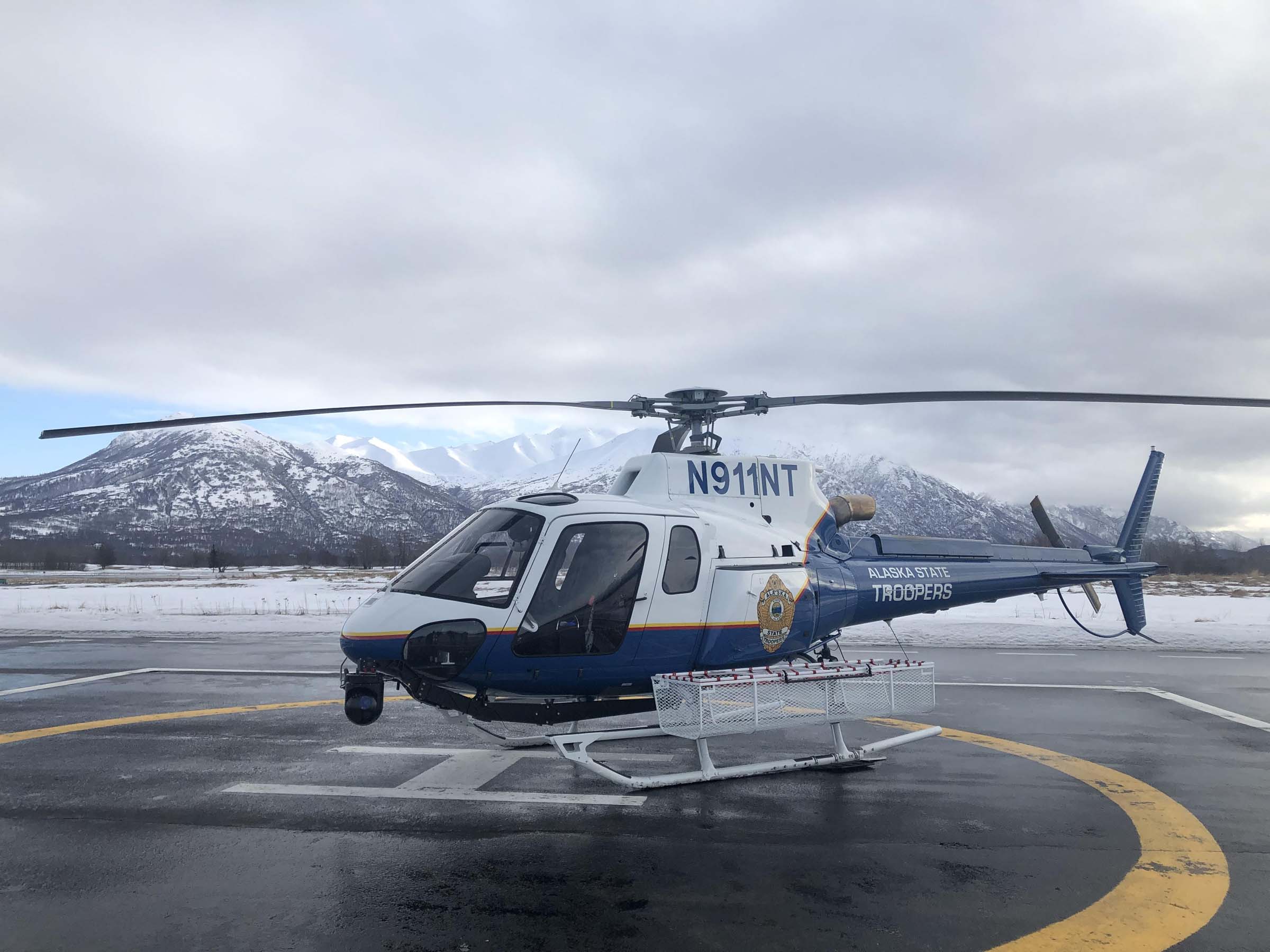
PALMER — Alaskans are being made safer when they go to recreate with the addition of two A-Star Airbus 350 B3E helicopters were equipped with external cameras to aid in search and rescue operations state wide.
“It truly does make it a safer operation for all involved, plus it maximizes the ability for us to spot somebody. It’s a game changer for the Alaska State Troopers,” Lieutenant Eric Olsen, of the Alaska Wildlife Troopers, said.
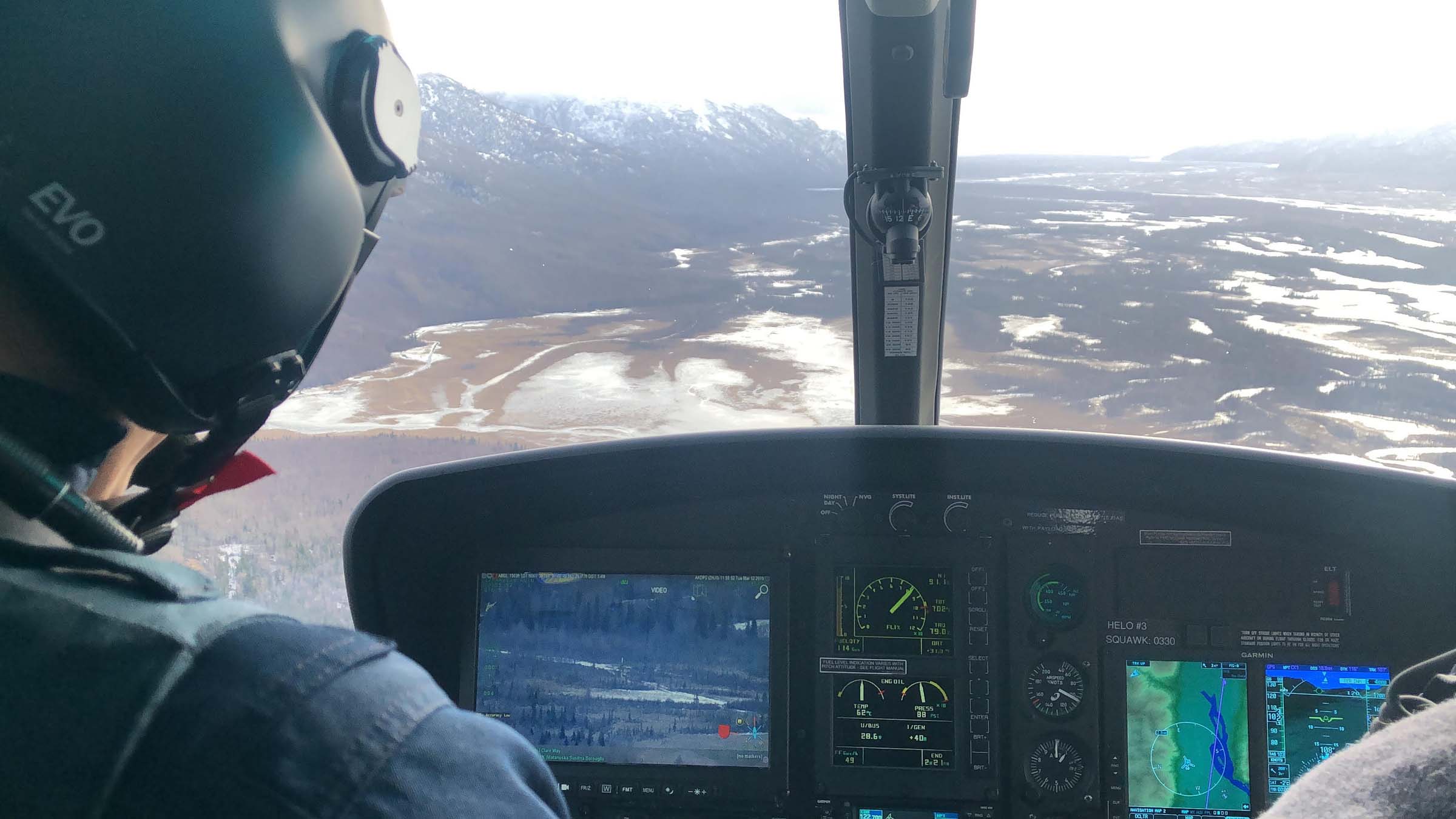
Olsen commands the aircraft section of the Department of Public Safety. On Tuesday, the Helo-3 equipped with mx10 camera systems and the Churchill Navigation map overlay system performed a training exercise for assembled members of the media. Helo-3 took off from the Palmer Airport and flew toward the Knik and Colony glaciers to demonstrate how the camera systems improve search and rescue capabilities. The cameras look like a black basketball protruding off the front of the helicopter, and are equipped on two AST helicopters stationed in Fairbanks and Anchorage with a 150-mile range on one fuel tank.
“It allows us to kind of have a couple different tools to look for and identify lost people out in the wilderness,” said Zac Johnson with the AWT.
Johnson serves as the Tactical Flight Officer for Helo-3, controlling the two electrical optical cameras, similar to a TV camera, housed with an infared camera that allows Johnson to identify heat signals. Johnson said that he has identified living things like moose from six miles away and aircraft from 20 miles away. There are a variety of ways that Johnson and pilot Tab Burnett, a civilian with extensive military aviation experience can utilize the technology to safely and efficiently rescue distressed Alaskans. Johnson operates a t-shaped controller during flight, and can direct the camera to ‘drop a pin’ on a heat signal, or punch in coordinates and allow the three cameras and mapping systems to search an area.
“The technique we use is we’ll use the infared camera to locate a living object moving around. Then we will switch to that electrical optical camera to figure out whether it’s a moose, it’s a person, what have you,” Johnson said. “We can program that into the system, bring that up on the moving map and then it can also point the camera directly at where we last knew them to be, which is very helpful for finding folks. Sometimes people wander just a few miles off a trail can very quickly end up with a really tremendous sized area that you have to search. Having a tool like this makes it much easier and more efficient to go out and search and area, and it’s tremendous from the search and rescue perspective.”
During the exercise, Johnson pointed out moose every few minutes, including a large grouping of nearly 20 moose where Matanuska Peak and the Matanuska River meet the Valley below. Burnett directed the helicopter toward Knik Glacier and was unable to locate the ‘missing hiker.’ After traveling over Colony Glacier, the hiker was located while Helo-3 was still miles away. The cameras are gyro-stabilized and synced with one another so that Johnson can switch between the electrical optical camera and the infared camera to determine what exactly he is looking at. The camera system cost a half-million dollars each, and the mapping systems are $100,000. The airbus helicopter itself is also immensely valuable for it’s maneuverability capabilities.
“It’s a very versatile platform that you find in everything from ski videos to James Bond films. It’s a very popular helicopter with very good reason, it’s very capable and reliable,” Johnson said.
The Alaska State Troopers were deployed on more than 500 SAR missions in 2018. Missions without the infared capabilities were made difficult by the natural camouflage of the Alaskan landscape or difficulty spotting those needing rescue with just the human eye and a set of binoculars.
“It’s ideal for all kinds of search and rescues whether it’s on land, sea, or you can spot other objects flying in the air. Anything that produces a heat signal provides a contrast to the thermal image and makes it very easy for the TFO in conjunction with the pilot to be able to spot persons, vehicles, airplanes, snowmachines, 4 wheelers,” Olsen said. “This really increases the rate of us being able to go out and locate someone and provide them the level of service. A lot of times when people get in search and rescue situations they may encounter medical situations in which every second counts for them to get medical help and treatment. Us being able to respond, locate and identify and transport that much sooner out of the field it helps saves lives tremendously.”
The camera systems have been equipped since mid-January and already deployed four times. Olsen detailed a recent situation with law enforcement officers on the ground who had surrounded in individual. Troopers in Helo-3 were able to communicate to officers on the ground when the man reached for a weapon and take him into custody without any shots being fired.
“We were able to call in the team and advise them to move in and so they were able to take that armed individual who was unarmed at the time they made contact with him and take him to custody and do what they had to do without any shots fired, without anyone getting hurt. Everyone went home at the end of their shift and that's a perfect officer safety example of how we were able to protect the public without anyone getting hurt and that's a victory in and of itself,” Olsen said.
AST has 38 pilots stationed statewide that operate 44 aircraft. Efficiency of SAR missions is often a life-or-death matter. Johnson said that SAR missions often rely on the assistants of units on the ground, who are often volunteer search and rescuers. Avalanche rescue or situations without a landing area may require assistance from officers on the ground. Not only does the Helo-3 help ensure the safety of Alaskans needing rescue, but the safety of the rescuers on the ground themselves.
“Our pilots are some of the best and I’m very proud of them...This is an incredible opportunity and is one of the best investments I think the state of Alaska has ever made. This will save lives. It already has,” Olsen said. “Our aim is to make safety as priority number one for our operations no matter where we operate throughout the state.”
Contact Tim Rockey at tim.rockey@frontiersman.com.

By Jeremiah Bartz Frontiersman.com A football coach using a hockey reference as the centerpiece for his keynote address may

Frontiersman.com With its headquarters in Wasilla, the Frontiersman has been a primary source of news for the Matanuska-Susitna

By Katie Stavick Frontiersman.com The next generation of leaders took flight this week as the Houston High School Class

By Kyle Wilkinson For the Frontiersman Keynote speaker and Carry the Cure President Bill Pagaran’s words boomed through the