Retiring teacher, coach urges Colony grads to ‘find their 68’
By Jeremiah Bartz Frontiersman.com A football coach using a hockey reference as the centerpiece for his keynote address may


ANCHORAGE — With the morning news that the World Health Organization had declared coronavirus a global pandemic Wednesday, Gov. Mike Dunleavy signed a disaster declaration concerning coronavirus in Alaska.
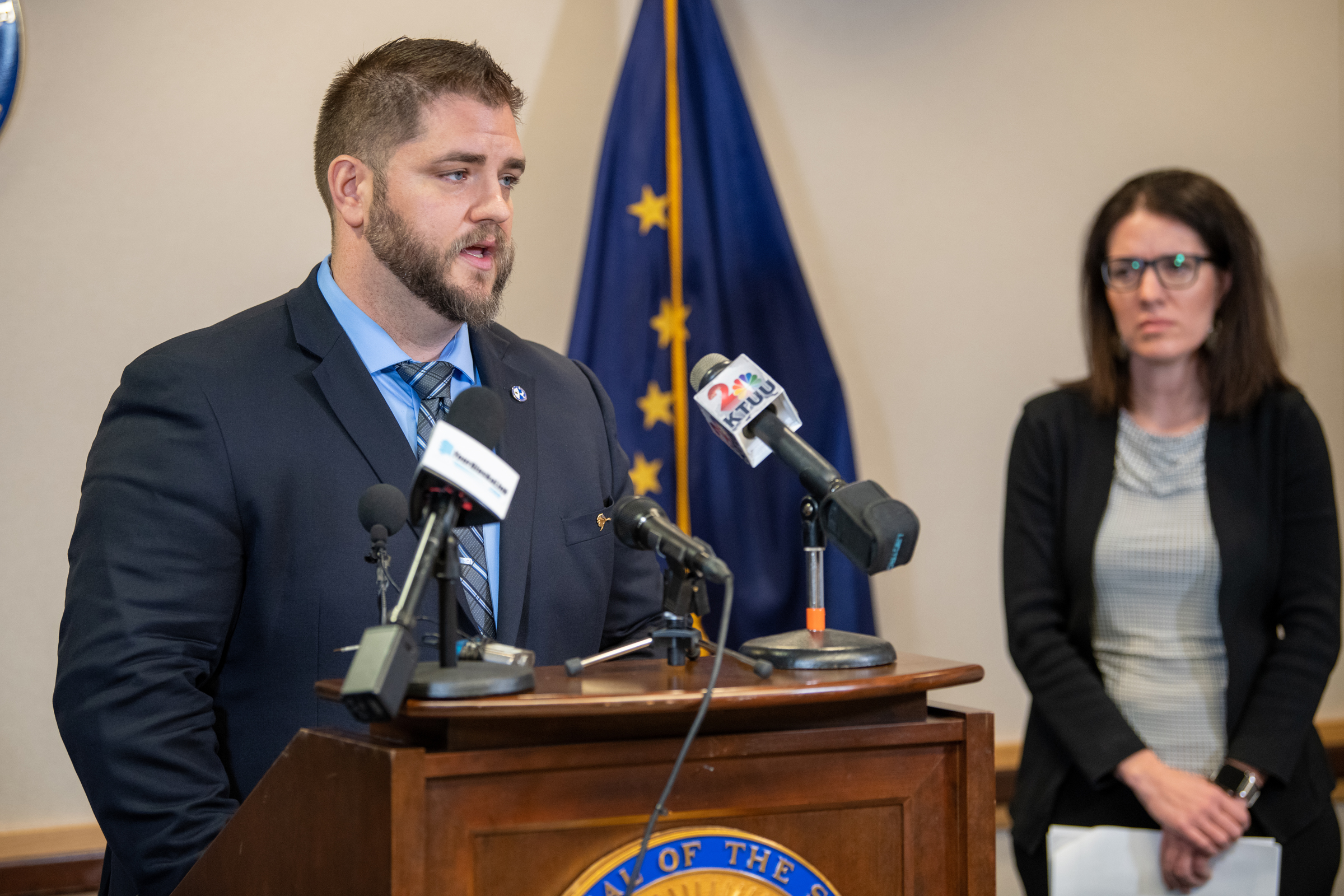
Dunleavy was joined by Department of Health and Social Services Commissioner Adam Crum and Chief Medical Officer Anne Zink. While they reiterated that there have not yet been any confirmed cases of the coronavirus in Alaska, strategy on prevention of the spread of COVID 19 will be centered around mitigation and prevention.
“The World Health Organization did declare this is a world pandemic. At this time that means that we’re seeing sustained community to community transition across the world and this is a world public health threat at this time,” said Zink. “We are concerned that there are cases here or likely coming and as a result believe that this is a public health threat at this time.”
As of Wednesday, 47 tests have been issued in Alaska for coronavirus with 31 coming back negative and 16 still pending. Dunleavy’s declaration of disaster will allow for $4.9 million in federal funding to come to Alaska to help mitigate and prevent the additional spread of coronavirus if and when someone tests positive in Alaska. Zink mentioned that strategies such as social distancing should not include social isolation, and now more than ever people need to monitor their loved ones and neighbors, if from a distance.
“We still need each other and we still need to work together,” said Zink.
Zink updated those at the press conference about the Center for Disease Control’s updated list of underlying health conditions that the CDC defines as a significant history. The coronavirus is affecting people over the age of 60 more dramatically and people over the age of 80 have a one in five chance of mortality. Those individuals with blood disorders such as sickle cell syndrome, chronic kidney and liver disease, compromised immune systems and cancer, recent recipients of organ transplants or those on high doses of cortisone, individuals with HIV or AIDS, those who were recently or currently pregnant, those with diabetes, heart disease, lung disease or other neurological disorders may be particularly at risk and are encouraged to remain six feet from others.
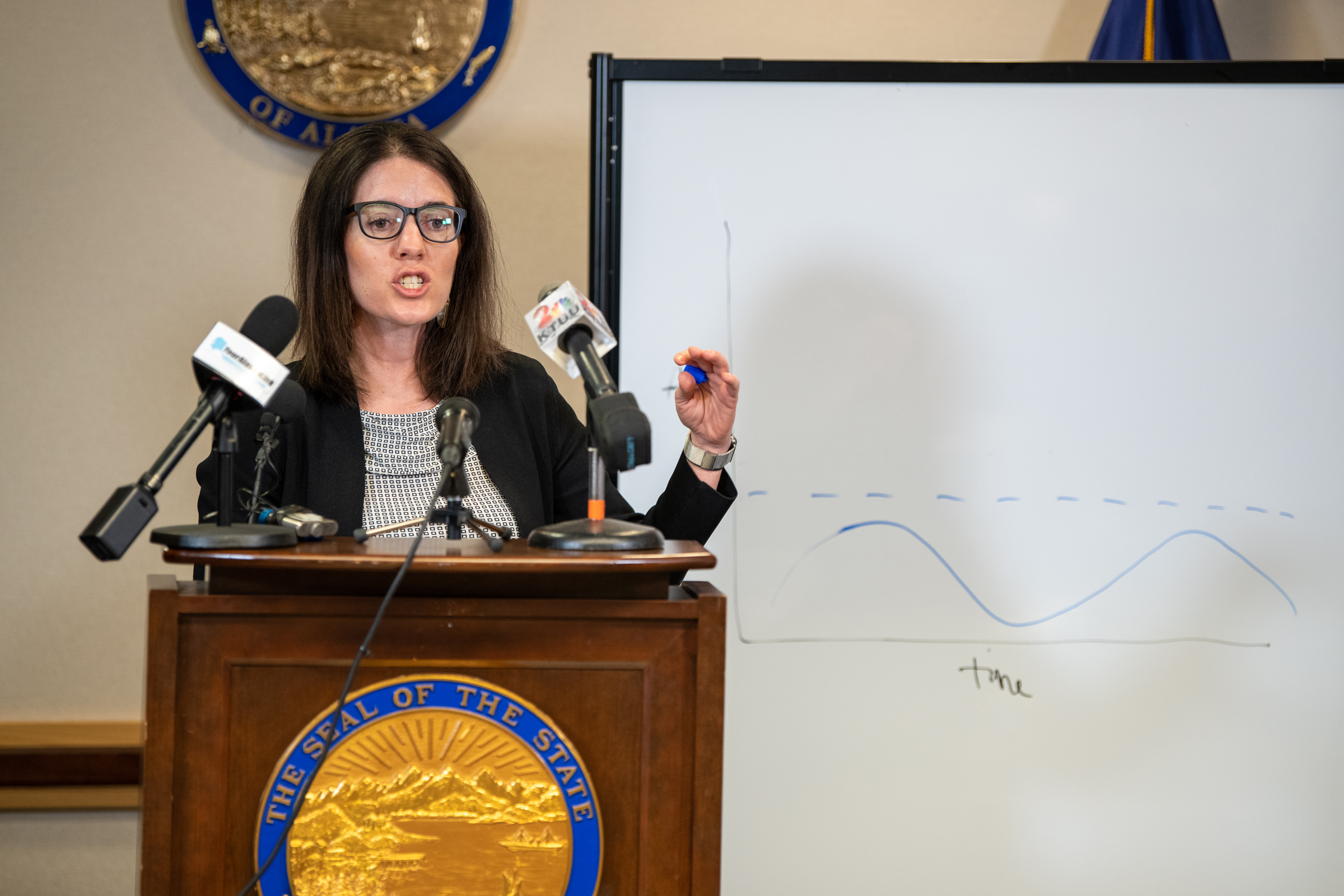
Dunleavy encouraged Alaskans to wash hands, practice social distancing and not gather in large crowds. Zink demonstrated on a dry erase board the capacity of the health care system and how it fluctuates on any given day as compared to how it could be overcrowded with an outbreak of COVID 19.
“What we’re concerned about is this delta, how much we expand over the health care system’s ability to care for people,” said Zink. “This is only going to be solved by all of us working together.”
DHSS Commissioner Adam Crum said that a total of 647 presumptive positive cases have been found in the United States with 25 COVID related deaths in 36 jurisdictions. Of those known cases, community spread has begun to occur in Washington, California and New York.
“We are expecting more cases of COVID 19 in the U.S. in the coming days, including more instances of community spread as the outbreak continues. At some point, widespread transmission of COVID 19 in the U.S. is expected to occur. Many people will get sick but based on what is known about this virus most people will not develop serious illness,” said Crum.
Along with at-risk populations of seniors and those with underlying health conditions, if the virus shows up in Alaska, healthcare workers will also be added to that list.
“What I want to tell Alaskans is that we’re all one on this issue. We’re going to put forth the resources to deal with this health issue that’s going to be impacting Alaska as it is the rest of the country,” said Dunleavy. “We feel pretty good about the protocols that we have in place.”
Dunleavy noted that while the lack of travel due to trepidation over coronavirus will likely have an increased economic impact in Alaska, he said that issue was not as important as the health of Alaskans.
“It’s going to be in Alaska. It’s probably here now and the chances are that it will grow but if we take the measures that we’re talking about, we’ll minimize it,” said Dunleavy. “This tool, again will allow us to access more funds from the Federal Government to have greater conversations within the state government. We’ll be able to deploy more resources where we need to deploy them and we’ll continue to add protocols, add tools to our approach to this coronavirus.”
More information can be found at coronavirus.alaska.gov or cdc.gov/coronavirus.

By Jeremiah Bartz Frontiersman.com A football coach using a hockey reference as the centerpiece for his keynote address may

Frontiersman.com With its headquarters in Wasilla, the Frontiersman has been a primary source of news for the Matanuska-Susitna

By Katie Stavick Frontiersman.com The next generation of leaders took flight this week as the Houston High School Class

By Kyle Wilkinson For the Frontiersman Keynote speaker and Carry the Cure President Bill Pagaran’s words boomed through the