Retiring teacher, coach urges Colony grads to ‘find their 68’
By Jeremiah Bartz Frontiersman.com A football coach using a hockey reference as the centerpiece for his keynote address may


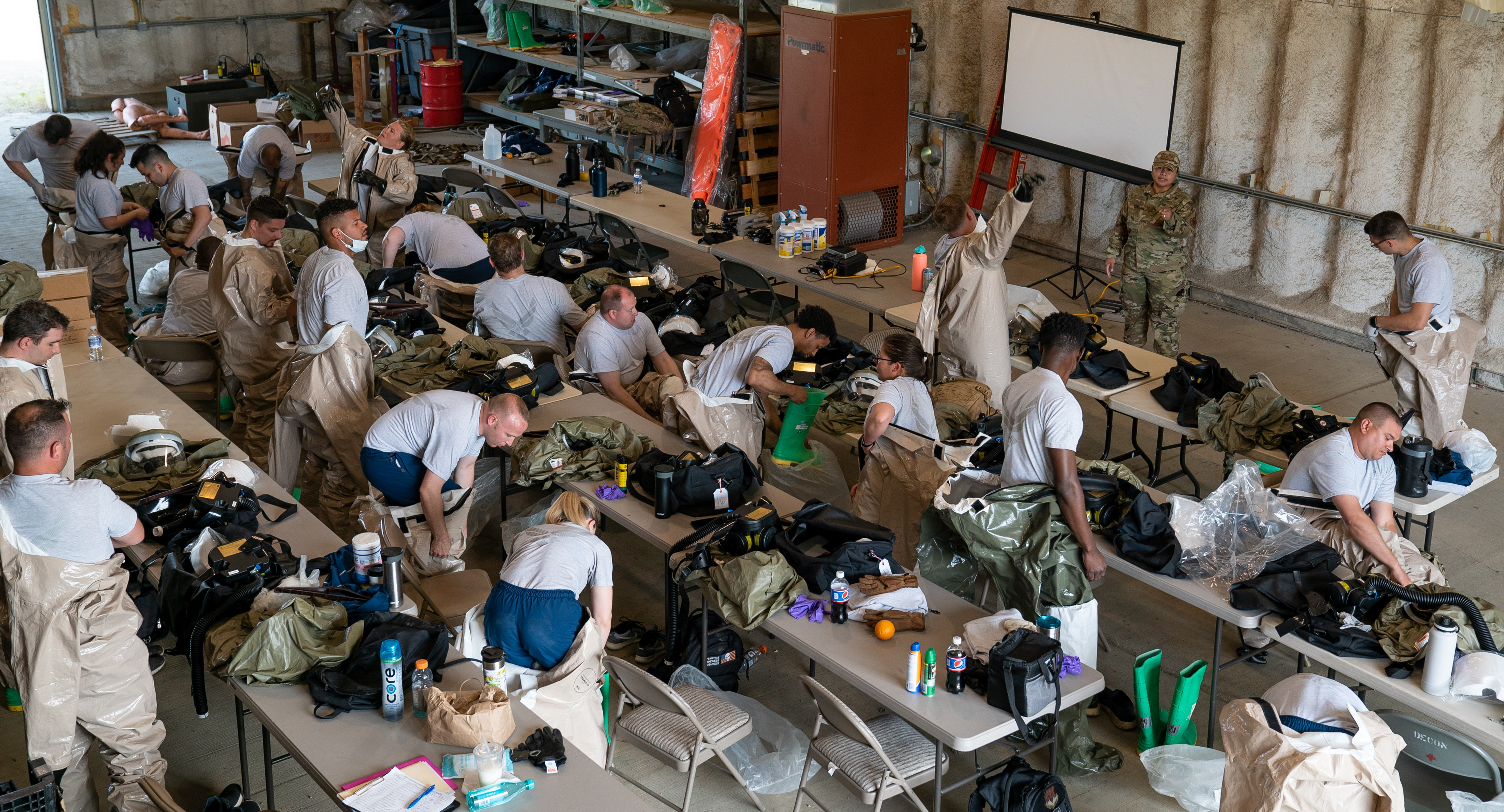
JOINT BASE ELMENDORF-RICHARDSON, Alaska – Traveling from a multitude of different bases, Airmen gathered at Joint Base Elmendorf-Richardson to participate in a decontamination training exercise July 12 through 16.
Normally hosted at Camp Bullis, Texas, the Patient Decontamination Course was relocated to Alaska to bring important training to medical Airmen who had been unable to attend previous exercises due to the COVID-19 pandemic.
The training was focused on decontamination procedures after a chemical attack or accident, setting up a checkpoint where individuals would be cleaned of all contaminants before passing into a care center.
U.S. Air Force Maj. Richard Ray, the Patient Decontamination Course program director, spoke on how a well-trained decontamination team is critical as they not only protect those directly exposed to dangerous chemicals, but also the people and assets that are beyond the checkpoint.
Ray stressed the added importance of this in a deployed environment where medical care centers are invaluable to sustaining effectiveness and morale.
Designed to simulate such a deployed environment, the Airmen participating were taught everything from how to set up and tear down the decontamination checkpoint to triage care in a chemical attack, along with decontamination procedures for themselves and patients.
After receiving training from the instructor team, the Airmen promptly tested their knowledge in a full-speed exercise simulating a chemical attack.
The Airmen began by putting on their decontamination gear, which completely sealed them off from the outside environment. They then raced to set up the checkpoint tent before patients began to arrive.
Once patients started showing up at the tent entrance, the Airmen began to triage them, judging the severity of their injuries and determining the order in which they were to be treated.
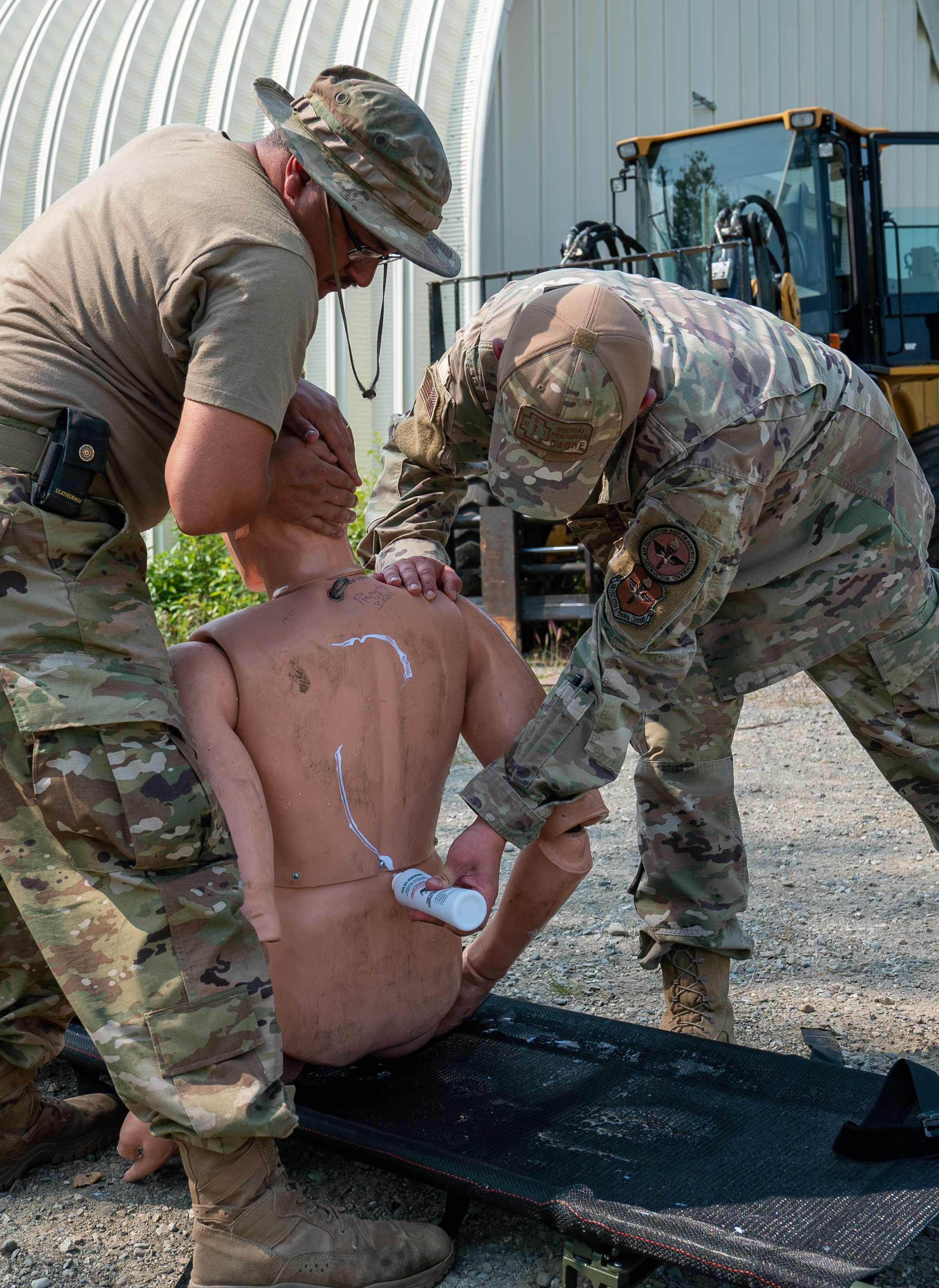
More able-bodied patients were taken through a standing shower and cleaned, while incapacitated patients, represented by mannequins, were taken through a roller system where they had their contaminated uniforms cut off before their bodies were scrubbed down.
The mannequins were then checked by an instructor with a blacklight, looking for a gel applied before the decontamination procedure to make sure the Airmen were cleaning properly.
After completing the training, the Airmen return to their home bases as a part of a Unit Type Code team, ready to be deployed in case of a chemical attack or an accident.
A UTC is a designator that represents a specific force capability that a unit can provide during a contingency situation, in this case providing decontamination procedures.
“The exercise was the first one we have done as a UTC team and it helped us get useful hands-on training,” said U.S. Air Force Maj. Deborah Colon, a 35th Medical Group flight commander travelling from Misawa Air Base, Japan. “It will help us be ready for potential threats that may need us to activate a decon team.”
In total, 38 of the 99 participants travelled from bases outside of Alaska, and will take valuable knowledge back to their home stations. Sixteen Alaska Air National Guardsmen participated, solidifying the Air Force’s integration of the total force mission.

Frontiersman.com Mat-Su Regional Medical Center was awarded an “A” Hospital Safety Grade for the 5th consecutive grading round

By Kyle Wilkinson For the Frontiersman Alaska Health Fair will once again partner with Sunshine Community Health Center (SCHC) to
By Rob Lewis Community spectrum By any honest measure, veterans have long been unintended pioneers in the advancement of medicine.
Katie Stavick Frontiersman.com On April 30, the Alaska House of Representatives unanimously passed House Bill 244, a landmark bill