Retiring teacher, coach urges Colony grads to ‘find their 68’
By Jeremiah Bartz Frontiersman.com A football coach using a hockey reference as the centerpiece for his keynote address may


In one sense, the ‘Off the Highway’ project Alaska Americana band Blackwater Railroad Company will begin in earnest next Thursday when they and their film crew hop aboard a pair of puddle jumpers to put on prom in the tiny Native village of Tyonek, was the inevitable and organic outgrowth of the band’s storytelling style.
More specifically, however, the origin can be traced to a 2012 encounter in rural British Columbia between a local Native and J.W. Frye, who was on a bike ride from Key West, Fla. to Prudhoe Bay to raise money for Hospice Care, in whose care both of his parents had died years apart.
“I ran into this gentleman named Gary. He’d heard me on the radio and came up to me,” recalled Frye, the innovative and market-savvy producer and songwriter behind Blackwater. “He told me his mission was to bring healing to the land and he told me that one day I was going to use whatever my special gifts were, which, I guess were talking a bunch… What he probably meant was that I was going to use my ability to connect people and tell stories.”
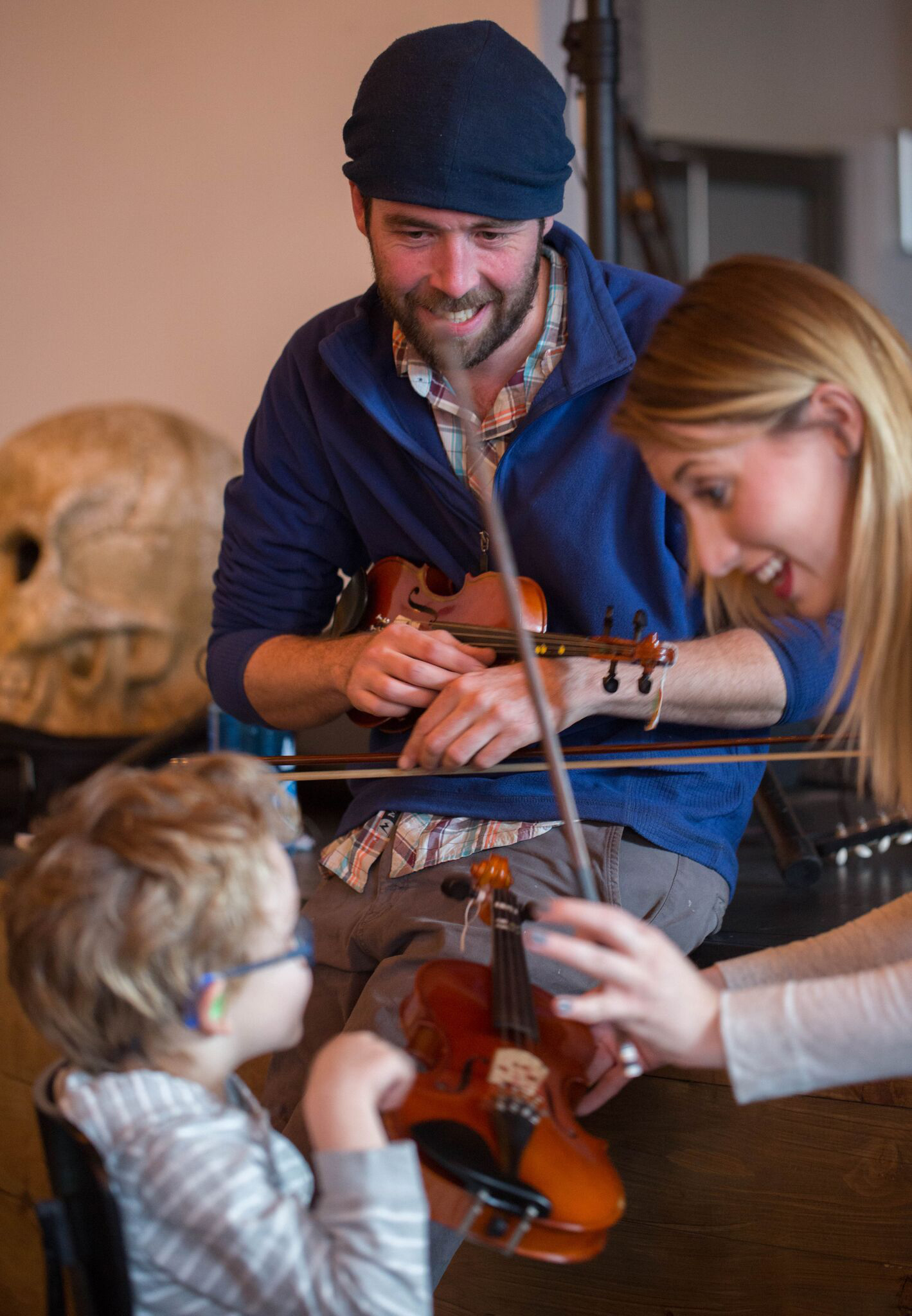
That conversation ultimately proved to be the fuel that, once sparked, became ‘Off the Highway’ — a documentary about a traveling band that passes through destinations in The Last Frontier that are not accessible by car to teach music to local school children. Not only would these local kids — most of whom in Alaska would be Alaska Natives — be stars of the film, they would be participating in every aspect, learning about filmmaking and cinematography along the way.
“We’re going into these villages and offering music mentorship and try to put in production equipment so the kids can put music together,” said Blackwater frontman Tyson Davis just before a February show at Williwaw to help finance the cinematic endeavor. “Not only that, but put them in contact with kids in other villages to get that voice of where they’re coming from — but that’s just the tip of the iceberg.”
Davis, as well as singer and percussionist Isaac London, live in Seward, the birthplace of the band. They commute to Anchorage a couple days a week for rehearsals. Frye splits his time between Anchorage and Seward.
Frye said the band’s ability to form a year-round following in Seward made them ripe for his epic vision.
“The idea was hatched in the winter, in lonely, empty bars,” Frye said. “We thought, well, Blackwater can entertain residents of this tiny town and continued to grow and that continued to be part of all our pursuits.”
Frye said the band’s help in restoring the local Masonic Temple to create an arts and music community center provided further inspiration and confidence.
“Then the idea was, well, what does it mean to have a community center? How is that defined by its communities?” Frye said. “The next step was, well, we don’t really hear much from other communities. Seward’s on the road, but at lot of these other places are not.”
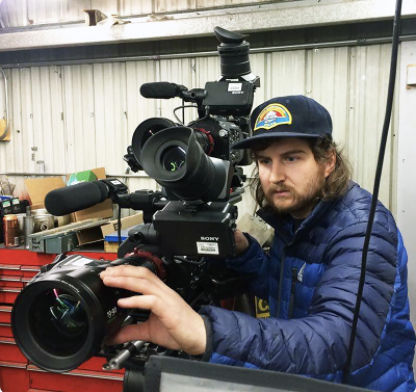
Blackwater’s journey will be filmed by prominent local videographer Cail Hubert, who hails from rural western Alaska, and Joshua Thomas, a three-time Emmy winner for his work on The Deadliest Catch. At remote sports all over the state they’ll team up with — and coach up — scores of kids, many of whom have probably never seen such equipment.
Isaac London is one of the band’s two original members. He lives in Seward and works at the Alaska Sea Life Care center where he works as a life support tech for marine mammals and birds.
“I’m grateful to have grown up with music in my life, so I continue to explore various musical horizons as an adult,” London said. “So much in this world can be expressed and said in various means of art, the visual arts and being able to bring that to places where it’s harder to get that out in the world — just to speak your voice — it’s great to help cultivate that.
For violinist Nicole Campanale, the venture dovetails nicely with her day job as a speech pathologist at Providence Medical Center in Anchorage, where she specializes in working with Native cultures.
“I also have experience communicating with Alaska Natives in pediatrics… there’s different communication styles, working and talking to build respect with people as patients,” Campanale said. “When they’re coming to the hospital, a lot of them are scared; they don’t know why they’re here. It’s a lot different than other cultures so it’s exciting to take those skills (to the villages).… A lot of it is about being open-minded with different cultures and how they view the individual differently. That’s a thing that is really important in a health care setting. I want them to tell their stories and let them be heard out of the village. Native languages are dying and this is an opportunity to help foster communication with elders.”
After the Tyonek prom, an idea which was fostered by the 5 members of the Tyonek High graduating class, Blackwater Railroad Company will be back on the road, performing that weekend at the Mermaid Festival in Seward.
The ‘Off the Highway’ plan is a year-long one, not expected to wrap up until January of next year.
“This isn’t just a one-off for a lot of these stops,” Frye said. “So much of what happens in rural life — wherever that world is — is tied to the season. There isn’t such a security net from the seasons in ultra-rural environments, so we have to make sure so much of the storytelling is tied in with the seasons.”
When all the footage is captured, the lengthy editing process will take up much of 2019. The expectation is for the film to be ready to debut at the October 2019 Anchorage International Film Festival, one of many groups apart from the band itself that were instrumental in seeing the vision take form. By this fall, the band hopes to have an album complementing the Off the Highway concept complete, along with a preview to screen at the October 2018 AIFF.
The band said the project wouldn’t be possible were it not for the groundwork laid by Dancing with the Spirit, which is headed by executive director and Episcopal minister Rev. Belle Mickelson, that considers its mission to “connect youth and elders through school music programs and camps--promoting spiritual, physical, and mental wellness with the joy, love, and hope of music. Our goal is to prevent suicide, drug, alcohol, and domestic abuse by building self-esteem, preserving musical traditions, and encouraging strong healthy communities.”
“There’s not a monolithic Alaska Native community; it’s as varied as there are numbers of villages,” Frye said. “We want to be as open as we can to the story, the tenor of their narratives.”
By Frank Murkowski Opinion Is the threat to Alaska real? I believe it is. The continuing conflict involving Iran is

Farmers markets set to open June marks the beginning of freshly grown Alaska produce showing up around the Mat-Su

By Kyle Wilkinson For the Frontiersman The Susitna Valley Emergency Preparedness Fair will be held at the Willow Community Center

By Tim Bradner For the Frontiersman Palmer’s Museum of History and Art hosted 30,000 visitors and 406 tour