Retiring teacher, coach urges Colony grads to ‘find their 68’
By Jeremiah Bartz Frontiersman.com A football coach using a hockey reference as the centerpiece for his keynote address may


Alaskans love their salmon. Salmon embody a cultural aspect for the people of this state probably more than any other natural resource found here. We count on their return each year. We hope for and favor abundance over times of scarcity. We fish for salmon for different reasons. Salmon are food for many of us, they bring income to others, and it is this prized group of fish that draws so many to Alaska from the Lower 48 each year.
There are, of course, enduring disagreements among those who fish for salmon, as those who have attended a Board of Fisheries meeting or followed the news during the summer can attest. However, if there is any one thing Alaskans can rally behind, it’s the sustainable health of our salmon populations. Maintaining healthy salmon populations in Alaska is directly tied to maintaining healthy salmon habitat. Alaska’s population is increasing and the Mat-Su Valley is one of the fastest growing communities in this state. The Susitna and Matanuska drainages are key watersheds that continue to support healthy returns of each of the five different Pacific salmon species native to the freshwaters of Alaska. However, pro-active measures need to be taken to ensure these healthy runs continue in perpetuity, and there is often no single entity that can effectively address the issue of maintaining healthy salmon habitat. This responsibility belongs to all of us.
One group leading efforts to maintain, build, and restore healthy salmon habitat is the Mat-Su Salmon Habitat Partnership. The Partnership began in 2006 as a locally driven, voluntary and non-regulatory effort to foster habitat conservation and coordinate local efforts throughout the Matanuska and Susitna watersheds. It is a member of the national Fish Habitat Partnership, which is tasked with the protection, restoration, and enhancement of the nation’s fish and aquatic communities.
The Alaska Department of Fish and Game (ADF&G), among others, has been a key partner in the Mat-Su Salmon Habitat Partnership from the beginning. Fish and Game staff initially helped other founding members including The Nature Conservancy, the Mat-Su Borough, and the US Fish and Wildlife Service develop a mission and a Strategic Plan, which serves as the backbone of the Partnership. The Strategic Plan is updated every five years and outlines goals and strategies that any entity can carry out. Today, the Partnership has more than 60 members, which represent tribal governments, state, local and federal agencies, non-profit entities, sport and commercial fishing groups and individuals, and businesses – all working together for the benefit of Alaskan salmon.
ADF&G continues to play a role in planning and tackling many of the goals of the Partnership, from data collection to habitat restoration. One of the restoration activities ADF&G is involved in is the restoration of fish passage by removing structures that prevent the movement of fish in streams. The outdated structures are generally undersized culverts installed decades ago when construction efforts did not sufficiently consider the importance of stream crossings in relation to salmon. As there is an average of one stream crossing for every three miles of road throughout the Valley, the cumulative impact is large. An ADF&G-led assessment found that there were over 560 culverts in the Valley, and about half were believed to have some impact on fish migration. The best solution is to remove undersized culverts and replace them with a bridge or “stream simulation” culverts that function as a bridge and allow fish and other stream dwelling animals to move unimpeded.
Since 2010, ADF&G has worked with the Borough, the Alaska Railroad, the US Fish and Wildlife Service and others to fund 17 fish passage projects, restoring access to over 55 miles of stream habitat and 729 acres of lake habitat in the Mat-Su Valley. In total, Partnership members (primarily the Borough and the US Fish and Wildlife Service), in addition to many others, have carried out over 100 fish passage projects from Sutton to Talkeetna. ADF&G continues to ensure no new undersized culverts are installed so that fish will have free access to habitat throughout the area in perpetuity.
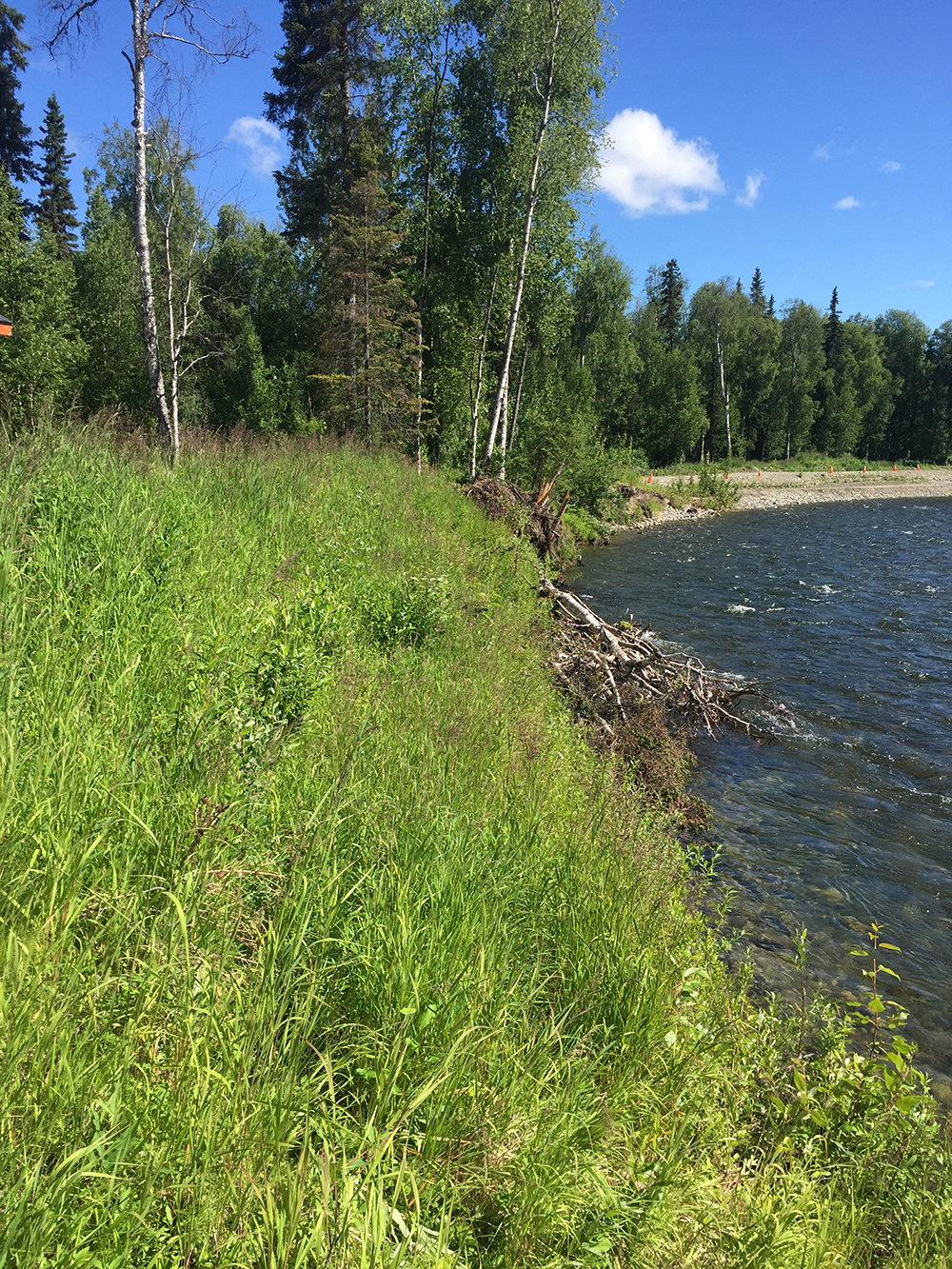
While barriers block fish movement, other direct impacts to streams generally come about as a result of property development or heavy fishing pressure. Fish depend heavily on healthy banks and shoreline areas for shade, food, and filtration of pollutants and sediment. Removing vegetation, installing lawns or septic systems as well as heavy foot or boat traffic, can impact the bank and the adjacent area, called a riparian zone. As a result, water becomes less clean and clear, temperatures rise, and fish lose critical protection spaces along the bank they need to survive. Most of these impacts can be reversed, and measures need to be taken to prevent them from re-occurring.
The future of Alaska’s salmon depends on the collective actions we take now. The Partnership makes it possible for anyone, regardless of whether and why they fish, to get involved in collaborating on the future of our healthy salmon. We owe it to ourselves and future generations to maintain sustainable healthy resources. There are many ways to become involved, a few of which are listed below.
ADF&G teaches two free annual workshops in the Mat-Su Valley or Anchorage designed to share the skills needed to carry out stream-based habitat restoration and fish passage projects. These workshops are open to the public and are very popular, typically filling up shortly after they are announced. Topics include fish passage, fish habitat, riparian health, and proper selection and installation of restoration techniques. ADF&G continues to work with attendees on projects throughout the summer and new partnerships are born each and every year. For more information, visit: www.adfg.alaska.gov and click on the word “Habitat”.
The Partnership runs a Symposium each November in Palmer where partners present on their work. The Symposium is open to the public both to attend and present. The Partnership welcomes assistance from members of the public in addition to its partnering agencies. This year’s 10th annual event will be held Nov. 8-9 at the Palmer Train Depot. More information on projects and events like the Symposium can be found online at: http://www.matsusalmon.org/.
Alaska Department of Commerce, Community and Economic Development • Alaska Department of Environmental Conservation • Alaska Department of Fish and Game • Alaska Department of Natural Resources • Alaska Department of Transportation & Public Facilities • Alaska Center for the Environment • Alaska Outdoor Council • Alaska Pacific University • Alaska Railroad Corporation • Alaska Salmon Alliance • Alaska Trails • AlaskaChem Engineering • Alaskans for Palmer Hay Flats • Aquatic Restoration & Research Institute • Bureau of Land Management • Butte Area Residents Civic Organization • Chickaloon Village Traditional Council • City of Palmer • ConocoPhillips Alaska, Inc • Cook Inlet Aquaculture Association • Cook Inletkeeper • Eklutna Tribal Conservation District• Environmental Protection Agency • Envision Mat-Su • Fishtale River Guides • Glacier Ridge Properties • Great Land Trust • HDR Alaska, Inc • Knik River Watershed Group • Knik Tribal Conservation District • Matanuska River Watershed Coalition • Matanuska-Susitna Borough • Mat-Su Anglers • Mat-Su Conservation Services • Mat-Su Trails & Parks Foundation • Montana Creek Campground • National Marine Fisheries Service • National Park Service • Native Village of Eklutna • Natural Resources Conservation Service • Palmer Soil and Water Conservation District • Pioneer Reserve • Pound Studio • SAGA • Sierra Club • Sustainable Design Group • The Conservation Fund • The Nature Conservancy • The Wildlifers • Three Parameters Plus, Inc • Tyonek Tribal Conservation District • United Cook Inlet Drift Association (UCIDA) • United Fishermen of Alaska • Upper Susitna Soil & Water Conservation District • U.S. Army Corps of Engineers • U.S. Fish and Wildlife Service • U.S. Geological Survey • U.S. Forest Service • Wasilla Soil and Water Conservation District
Sam Cotten is the Commissioner of the Alaska Department of Fish and Game and grew up fishing in the Mat-Su Valley.

By Christian Hartley Now You Know If you have ever wondered what the borough attorney actually does, you are not

By Katie Stavick Frontiersman.com In a direct response to public outrage over a horrific animal neglect case, the Matanuska-

By Jeremiah Bartz J’s World August would have been the start of my 25th year as an editor at
By Frank Murkowski Opinion Is the threat to Alaska real? I believe it is. The continuing conflict involving Iran is