Retiring teacher, coach urges Colony grads to ‘find their 68’
By Jeremiah Bartz Frontiersman.com A football coach using a hockey reference as the centerpiece for his keynote address may


ANCHORAGE — In presenting numbers at the nightly press conference detailing Alaska’s response to the worldwide COVID 19 pandemic, Alaska’s Chief Medical Officer Dr. Anne Zink provided a positive update.
On Friday, Alaska reported nine more people that had tested positive for coronavirus, with no new deaths, one new hospitalization and no new cases reported in the Mat-Su since Sunday. While nine Alaskans have died due to infection with coronavirus and 36 people have been hospitalized total, 128 people have recovered from symptoms. As 9,450 Alaskans have been tested for COVID 19, the percent positive of Alaskans tested dipped for the first time down to 3.3.
“It was great to see that kind of bump in our testing today,” said Zink. “If we do all that we can then we will together be able to be much more effective than any mandate or any one way of going about this.”
Of the nine new cases, seven were reported in Anchorage and one in Kenai and Juneau.
Department of Labor and Workforce Development Commissioner Tamika Ledbetter announced that $922 million had been paid out through 4,848 claims by Alaskans through the Small Business Administration’s Paycheck Protection Program. Out of 40,000 unemployment insurance applications filed, Ledbetter reported that 38,000 had been paid out to a sum of $40 million to Alaskans.
“I know that many of the Alaskans out here have experienced long wait times. I understand that, but I want to assure you that we have put into place improved processes and we do so on a daily basis to expedite the application process,” said Ledbetter. “We now have 100 additional staff members who are on staff available to assist us in working through this increased workload and so we went from record low unemployment to now overnight record high unemployment and I believe over the last few weeks we’ve done quite well.”
Ledbetter said that a new virtual chat feature called ‘Watson’ was introduced to help assist those waiting for unemployment claims with questions. Ledbetter said it could take up to three weeks to receive payment once a claim is filed and fervently thanked DOLWD employees for their work in response to Alaskans need during the pandemic. Self employed Alaskans will be able to file their claims on Monday.
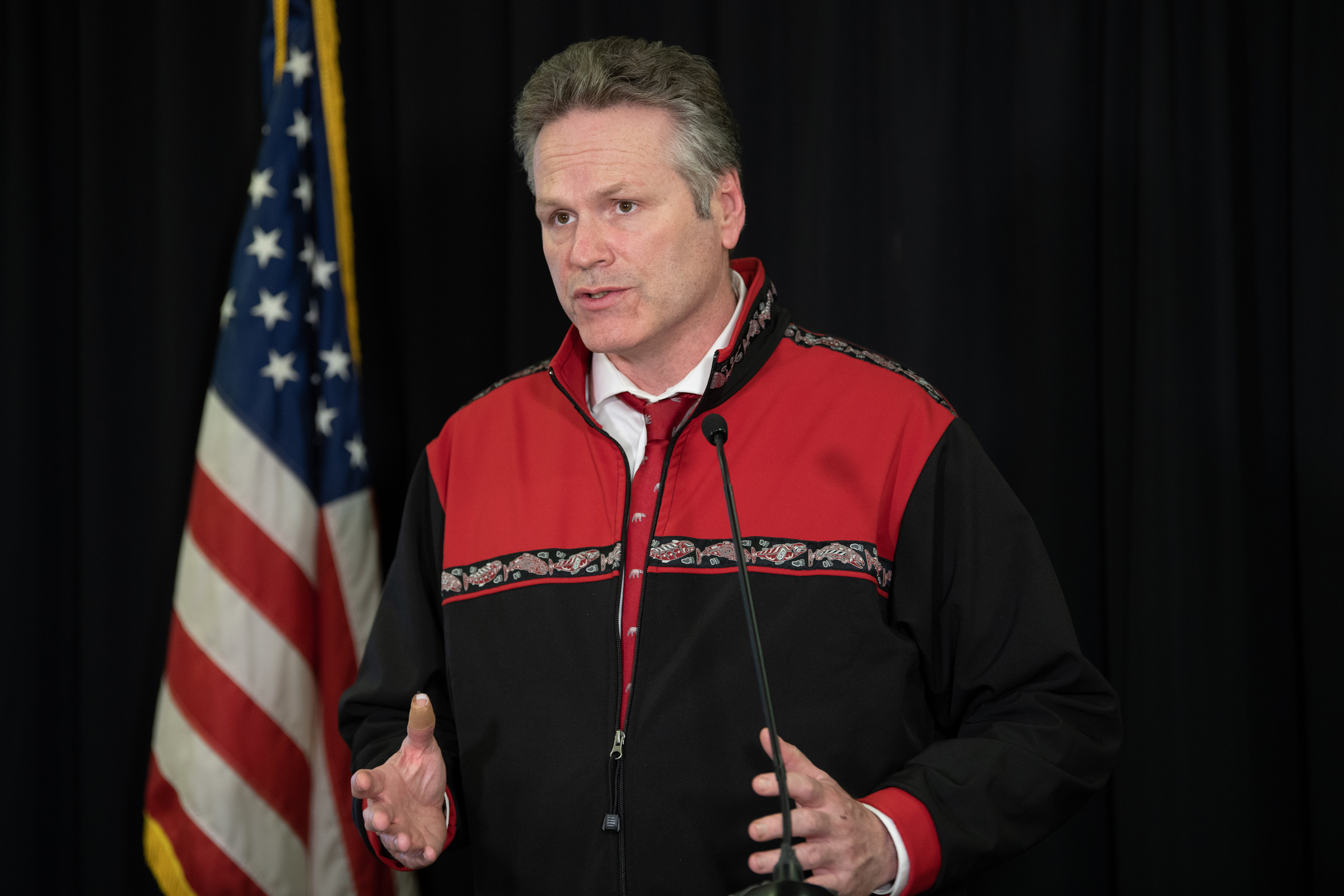
“We’re going to be looking at Alaska almost as if it’s its own country when we’re going about opening up sectors,” said Gov. Mike Dunleavy. “There may be more assistance coming to help businesses again as we said in many cases many if not all cases through no fault of their own were shut down by the government in an effort to battle this pandemic, so we do have a responsibility to assist those businesses.”
Dunleavy said that Alaska is unique when examining which sectors of the economy can be opened, and said that as mandates are rolled back, open sectors would be monitored to see if there is a spike in cases. Dunleavy said that he would discuss opening retail locations next week and his administration would work through the weekend on when and where advisories and mandates would best serve Alaskans over the coming weeks.
Dunleavy said that his administration was working with the tourism industry to discover what funding may be available through the Federal relief monies, and mentioned that
Rep. Don Young is working on providing aid to the cannabis industry in an upcoming bill. When asked about large gatherings nationwide to protest restrictions that have been scheduled in Alaskan communities, Dunleavy was sympathetic.
“I would agree with them to a great extent. It’s infringing upon me,” said Dunleavy. “I understand it. We’re trying to get back to what we were as quickly as possible.”
Department of Health and Social Services Commissioner Adam Crum answered a variety of questions about upcoming salmon fisheries around the state and how their communities can prevent spread of COVID 19. Crum said that working groups had been assembled through assistance from the Alaska Municipal League to connect the Health Department and Industry Sustainability Group with guides, sportfishermen and personal use fishermen. Crum said he wanted to make sure regulations make sense for each community based on their health care capacity and that many medical supplies and rapid test machines had been pre distributed to coastal fishing communities.
“As we’ve seen this play out in Alaska on ongoing critical infrastructure, we have worked with these industries to get normalized processes in place. We see what’s going on, what is the best way to protect and make sure screening is in place, and so we are going to continue to evolve this process,” said Crum.
During Dr. Zink’s presentation, she discussed the ‘R-naught’ method of tracking the contagiousness of the disease that determines the flatness of the curve. Zink said that small changes in mitigation can make a huge difference to prevent health care systems from being overwhelmed and used the model to display how if rate of transmission increased, Alaska could soon exceed the health care capacity.
“The crazy thing about exponential growth is just how quickly it can grow. I think that we really think as humans in linear terms but the reality is, this virus grows in an exponential term,” said Zink. “What’s also really great about the R naught value is that we have control over it. We get to choose how contagious this is and what we do about it.”

By Jeremiah Bartz Frontiersman.com A football coach using a hockey reference as the centerpiece for his keynote address may

Frontiersman.com With its headquarters in Wasilla, the Frontiersman has been a primary source of news for the Matanuska-Susitna

By Katie Stavick Frontiersman.com The next generation of leaders took flight this week as the Houston High School Class

By Kyle Wilkinson For the Frontiersman Keynote speaker and Carry the Cure President Bill Pagaran’s words boomed through the