Retiring teacher, coach urges Colony grads to ‘find their 68’
By Jeremiah Bartz Frontiersman.com A football coach using a hockey reference as the centerpiece for his keynote address may


If I’m to believe everything I’ve read about Tailgate Alaska and what it’s doing to Thompson Pass, it sounds like an event you don’t want to miss. Just imagine a Thunderdome of snowmachines crisscrossing the public highway, pallet and tire fires lining the parking lots along the once pristine corridor of the Richardson Highway. Rampant and open drug use and dirty needles are piled up near flocks of birds rummaging through trash piles and open sewers. And everyone there is an alcoholic.
Packs of dogs and drunks have transformed this place into a wasteland, populated by dirtbags searching out their next oil spill or opportunity to discharge their weapons. Luckily, these dirtbags don’t eat or spend money on anything but crystal meth and motor oil. If you go, you’ll need to watch your back. And be careful not to stumble into Camp One Love–they’re the Valdez locals and fellow interlopers who plot the area’s destruction from their Department of Transportation maintained sanctuary.
In the mountains, helicopters land on snowmachiners. People run into the nearest ice caves in an attempt to dodge madmen on machines they have no control over. And that’s just before it gets dark.
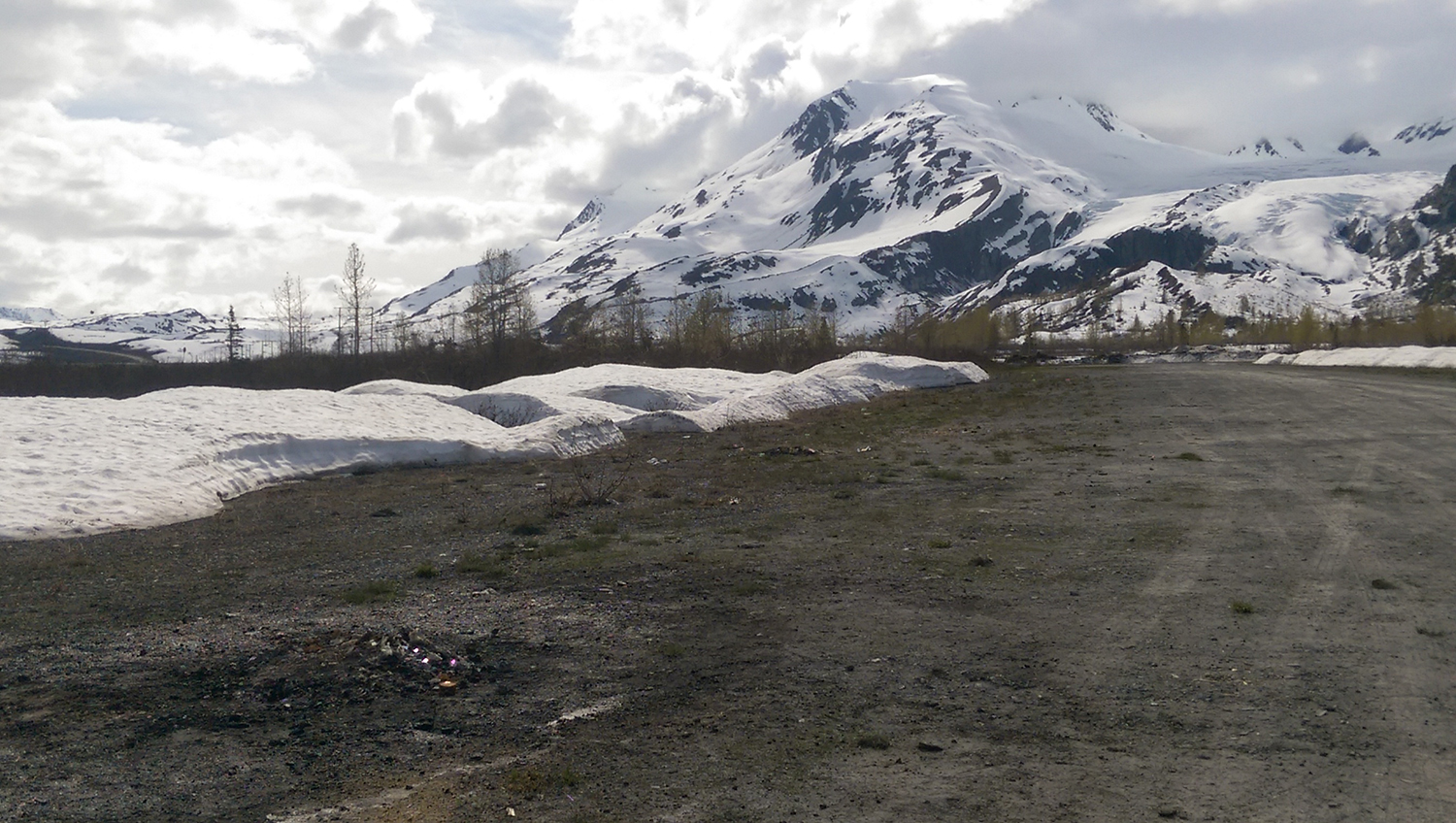
At night, the occupants of Tailgate make the mile-long trek to a picturesque campground to dump the trash that gets in the way of their midnight snowmachine drag races. Worthington Glacier has become Tailgate’s own personal dumpster.
Lifelong heli clients and State Troopers have been completely scared off. The local food bank is being emptied as Valdez locals go unfed.
Did I mention the noise? It’s a cacophony of snowmachine carbides being dragged across giant blackboards 24-hours a day. There is no sleep, and forget about personal property– padlocks mean nothing to these people.
And whatever you do, don’t bring your kids.
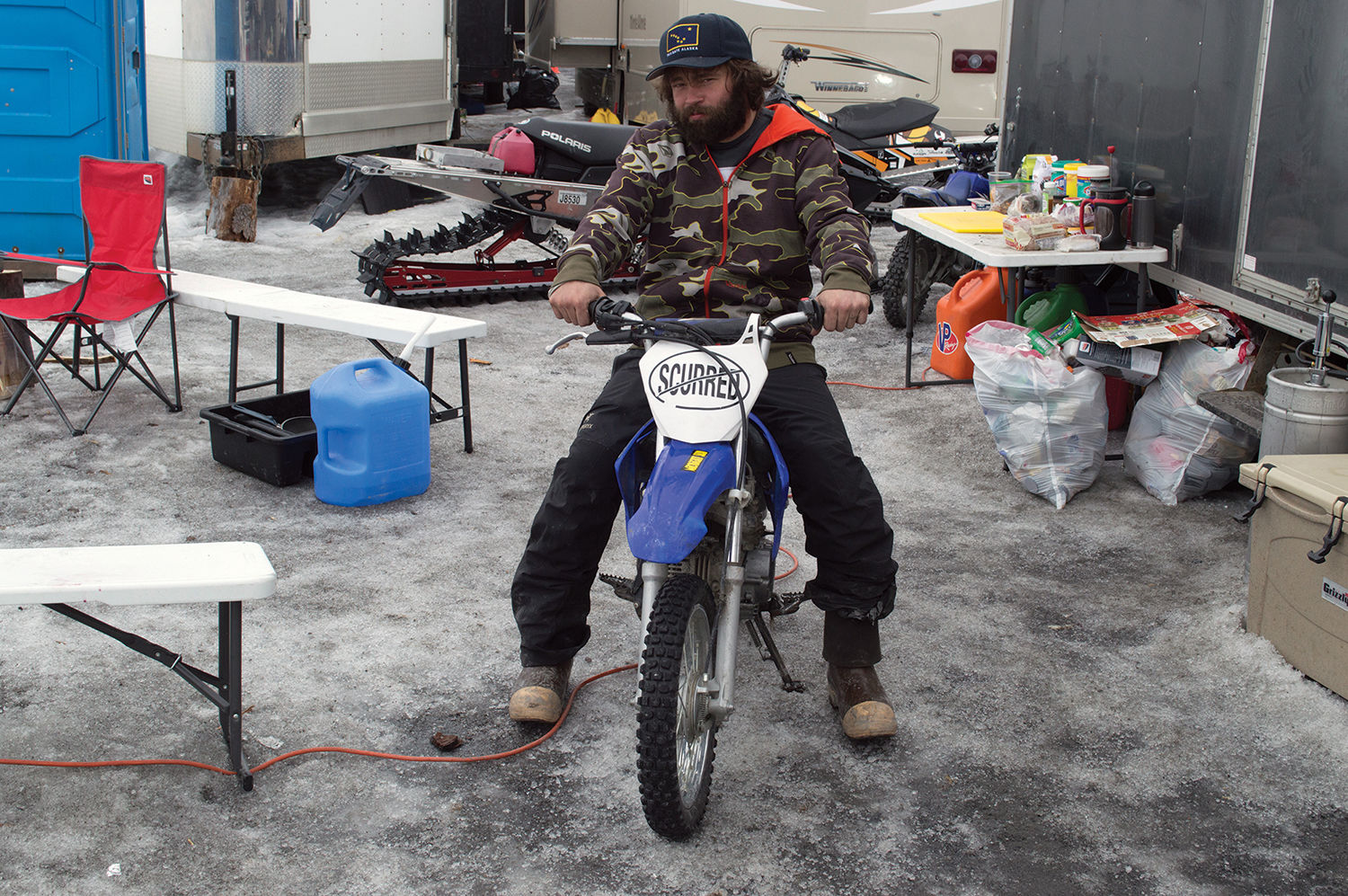
Leading this derelict movement is Mark Sullivan–a true super villain in a black down-jacket and bright orange rubber boots. He’s a media mogul who has transformed Thompson Pass from a serene and untouched paradise to his own post-apocalyptic Thunderdome. His accomplice in all of this, the Alaska Department of Natural Resources. And now me.
Sound unbelievable? Well, you haven’t read the letters I have.
***
The catalyst for those letters, sent to the Alaska Department of Natural Resources (DNR), belongs to a change to Tailgate’s land use permit–an increase from a total of 500 participants to a maximum of 3,000, with an increase from 60 to 90 days to the permit.
“I read all of the letters,” Sullivan says. “It wasn’t easy. The part I really didn’t like was how it painted a snowboarding and skiing event as a crazy party. The people that travel across the world to participate are there to ride Alaska, period. That and calling it dirty. I personally spend weeks after the event ensuring the Tailgate lot is clean. It is one of the worst jobs, picking up every bread bag tie and bottle cap, but someone has to do it.”
The reality is that the change in Tailgate’s permit reflects a desire to be prepared for changes that are currently underway.
“I can see the issues on Thompson Pass in places that don’t have facilities. We have a lot of people from across the Pass come to use our bathrooms and dumpster,” Sullivan says. “I think that more thought needs to go into how to ensure Thompson Pass can adequately accommodate its growing usership. The change in our land use permit is meant to help provide these facilities to Thompson Pass users outside of the Tailgate Alaska event–which will, due to its nature, remain unchanged in its own size into the foreseeable future. If we are capable of absorbing some of that outside traffic into our parking lot during the spring months, where we have bathrooms and dumpsters, then maybe we can temporarily solve the public’s problem with increasing users in the Thompson Pass area. The idea that we wanted to put 3,000 people in Thompson Pass at once is absurd. It was a last-minute change to our previous permit so that we could be prepared for a future in which more and more visitors are coming to the Pass.”
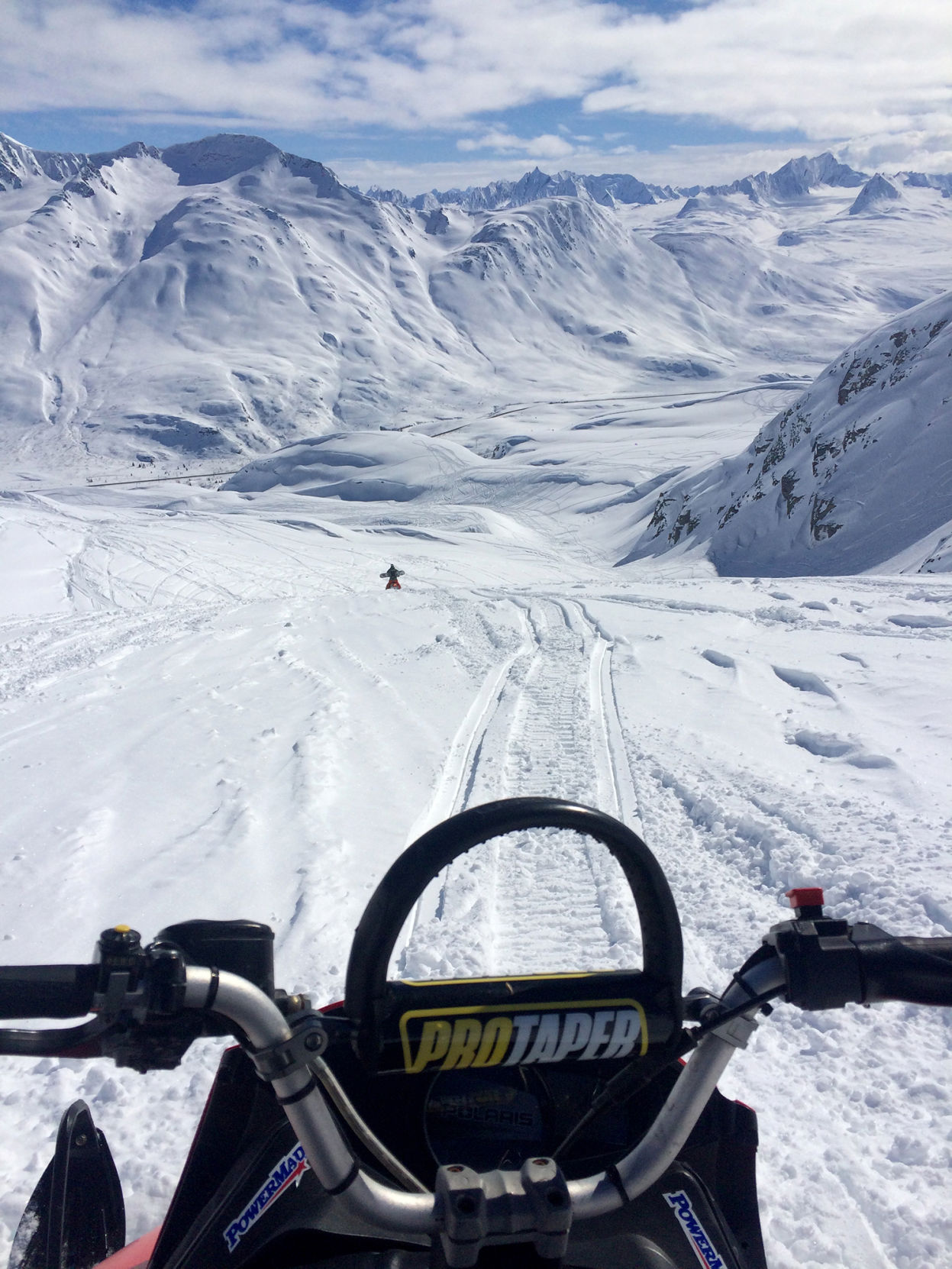
With all these people, comes more tracks from skis, snowboards and snowmachines. And first tracks are why people come to Thompson Pass. Heli operators sell them in packages for thousands of dollars. Snowboard dirtbags camp in tents inside caves chiseled out of snowbanks. Ski bums sleep in trailers and pick-up trucks for weeks at a time so that when the sky does go blue, they have the opportunity to put their own tracks down the side of the mountains.
I’m one of those snowboard dirtbags. An old Boarderline Snow & Skate kid from Fairbanks who has somehow found himself at the center of this huge controversy. I started out like every other Tailgater–I was there to ride the best mountains in the world. But over the past four years, I have come to know Sullivan as a friend, a boss and a mentor. I went from sneaking into the Tailgate lot to use their bathrooms to the guy who now walks the airstrip checking the “levels” of the port-a-potties. I went from trying to get free stuff from event sponsors to the guy managing Tailgate’s sponsorships.
I had only traveled to Valdez once as a kid from Fairbanks. I have been there four times in the past six months.
I have spoken in front of the Valdez town council and the Economic Diversification Commission (EDC) about the future of winter tourism in Valdez. Last fall I found myself sleeping in a rental car for three days in a hayfield in Minnesota, all so we could pass out a thousand posters for Tailgate, planting the seed for the next generation of adventurers.
I was never asked to do this. Not by Sullivan or anyone else. I placed myself here because the spirit of Tailgate is something I believe in. It harkens back to the different eras of skiing and snowboarding’s history that my generation never got to experience. Squaw Valley in the 80s, the Burton US Open events in Vermont and, of course, the Wild West days of Thompson Pass in the 90s. It is this passion that led me to the center of this debate.
However, after reading 254 pages of public comments, both for and against Tailgate’s land use permit, I found this debate to be in a state of crisis.
At one end of the spectrum, you have the city of Valdez currently pushing to increase winter tourism to the area. The EDC’s strategic initiatives call for a 20 percent increase of winter tourists over the next five to 10 years. The city is spending hundreds of thousands of taxpayer dollars to accomplish this, $40,000 of which is spent on Tailgate 2017. $160,000.00 was spent on a feasibility study for a year-round mountain resort – with three different applicants, each pushing for their own version of what could become the “Alyeska of Valdez.” $125,000 has been allocated to bring back the World Extreme Skiing Championships (WESC) for a third time. And with the addition of snowboarding to the extreme contest comes a new acronym–WESSC.
As oil revenue shrinks, the city is hoping to find new sources of income for its city coffers and local businesses. The idea behind hosting winter events is to draw in outside tourists who will spend money and, when they return home, hopefully spread the good word about their time in Valdez. This has been Sullivan’s mission since the beginning of Tailgate.
The McDowell Group in Juneau recently completed a visitor market profile for Valdez in which Tailgate submitted data for. The study concluded that winter visitors spend on average $723 on their Valdez trip. That is over 2 million dollars of outside money that can be directly attributed to Tailgate over the past 9 years–if you go by the McDowell Group numbers.
It should be noted that not all of a Tailgater’s money gets spent in Valdez. Only some stay in Valdez during the event. Most rent RVs in Anchorage so they can stay in Thompson Pass. However, the propane in the RVs only lasts about 3 days, meaning each RV has to make about two trips to Valdez per event. Tailgaters restock on any supplies they might need, pay for a warm shower and grab a bite to eat at one of the local restaurants. They don’t spend any money at the local bowling alley or movie theater, but that’s because Valdez doesn’t have a bowling alley or a movie theater.
Not everyone thinks Tailgaters bring money into the Valdez economy. Laurine Regan, Executive Director of the Valdez Convention & Visitors Bureau (VCVB), falls onto that list. In her letter to the DNR, she says, “Mark Sullivan has been quoted that his event creates an economic impact to the city of Valdez, which is incorrect. The users of Tailgate - park and live up in his permitted area and across the road from it, and only a few enter the town to obtain food supplies, but not enough to create a significant economic impact to the town’s businesses. As a tourism bureau we monitor tourist traffic and have data if required as proof.”
When asked for the tourist traffic data, the VCVB could not provide data nor could it confirm its existence. They did, however, confirm that in 2016 a total of 26 people attending Tailgate Alaska personally walked into their office in Valdez.
At the other end of the debate is a battle between the different users of Thompson Pass. There are the skinners and splitboarders who use trail mix and mental fortitude as fuel to reach the tops of mountains, and then there are the helicopters and snowmachines. This is commonly referred to as mechanized vs. non-mechanized.
Alaska Snowboard Guides (ASG) is one of the heli ops opposed to Tailgate. It’s ironic, in that Sullivan signed off on ASG’s original permit to operate helis in Thompson Pass and their first revenues were off the same people they now oppose. Dave Geis, owner of ASG and former office manager of Tailgate Alaska, was mainly concerned about the increase of people and what it means for safety in the mountains and for his business.
“The event is a spearhead for people who might not choose to come out and drive the 250 miles," Geis told me over the phone. "So they come out to have a good time and party and shoot fireworks off and make a ton of noise and be rowdy as shit when that’s not really what you should be there for. Bringing in that type of environment is the last thing anybody needs in the long term for Thompson Pass. The highest concentration of snowmachine use is during Tailgate Alaska–there’s no doubt about it. Now it grows on each side of it. People come a little before and they stay a little after. We just want to see the resource remain valuable. The reality is maybe that’s not sustainable in the long run. Maybe we’re not gonna have snowmachining in the Chugach. If that’s the case, then that’s a bullet I can bite.”
Andy Walton is the Operations Director for ASG. In his letter to the DNR he inferred that there is very little heli skiing involved in the event, that it is just a party for snowmachiners and that the clientele of Tailgate has no respect for the heli industry.
According to Sullivan, last year marked the highest amount of pre-booked heli time in Tailgate’s history. In the past two years alone Tailgate has transferred $105,000 to Black Ops Valdez, their previous partner.
“Tailgate’s first years saw the majority of people using helicopters to access the mountains,” Sullivan says. “Over the next few years, snowmachine technology increased dramatically which allowed skiers and snowboarders to get out into the same places helicopters had been flying. So, we saw this natural shift where the participants started using snowmachines for easier access. Sure, people at our event still use helicopters, but they definitely see the value in using a snowmachine as well. This has opened the doors of Thompson Pass to an entire new generation of riders who were priced-out of the helicopter game.”
In the ‘90s, Thompson Pass belonged to WESC. Those competitions led to the creation of a heli-ski industry in Valdez and attracted professional athletes from around the world for two decades. The WESC certainly left its legacy on Thompson Pass, as will Tailgate. ASG got their start in the Tailgate lot. Children have introduced themselves to snow science education while staying at basecamp. Travis Rice took 1st place with an explosive run down Bro Bowl in the revived King of the Hill contest. Now, Valdez locals like Sunny Hamilton and Rydor McCune compete against people from around the world in the Valdez Banked Slalom.
The difference between the WESC era of Thompson Pass and the Tailgate era lies in the word “extreme.” In the WESC days, the word had a ubiquitous meaning. In the era of Tailgate, it means something different to everyone. Today, skiers and snowboarders of all levels push themselves in many different ways in the Chugach mountains, yet when they return to the Tailgate basecamp they are all equals.
***
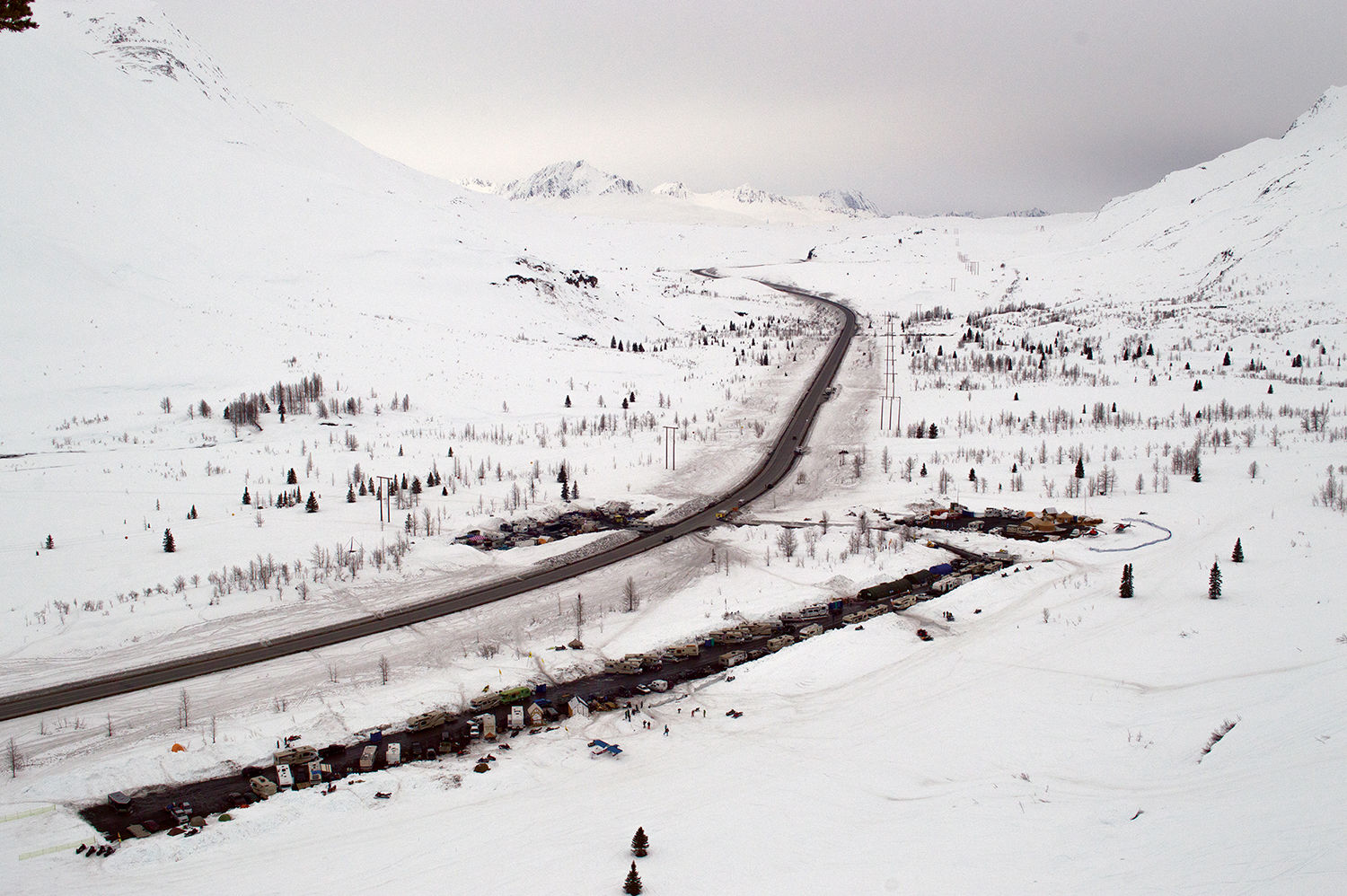
Tailgate was created 10 years ago with the intent of sharing the experience of Thompson Pass with more people. Hundreds travel to its basecamp each year–basecamp is an old airstrip plowed out specifically for the event. It has hosted participants from more than 24 different countries and introduced on-site snow safety classes, rescue teams for recreational backcountry users and even brought back two famous backcountry contests, King of the Hill and the WESC; two iconic contests that took place in the 90s and helped solidify Valdez as a skiing and snowboarding Mecca.
Over 3,000 people have come to experience the area for the first time since the event kicked off. Media coverage of Tailgate is global; it’s been featured in magazines and on television. The event itself has become a backcountry spokesperson in the European market, promoting riding in Alaska at the world’s largest sporting goods tradeshow each year in Munich called the Internationale Fachmesse für Sportartikel und Sportmode (ISPO).
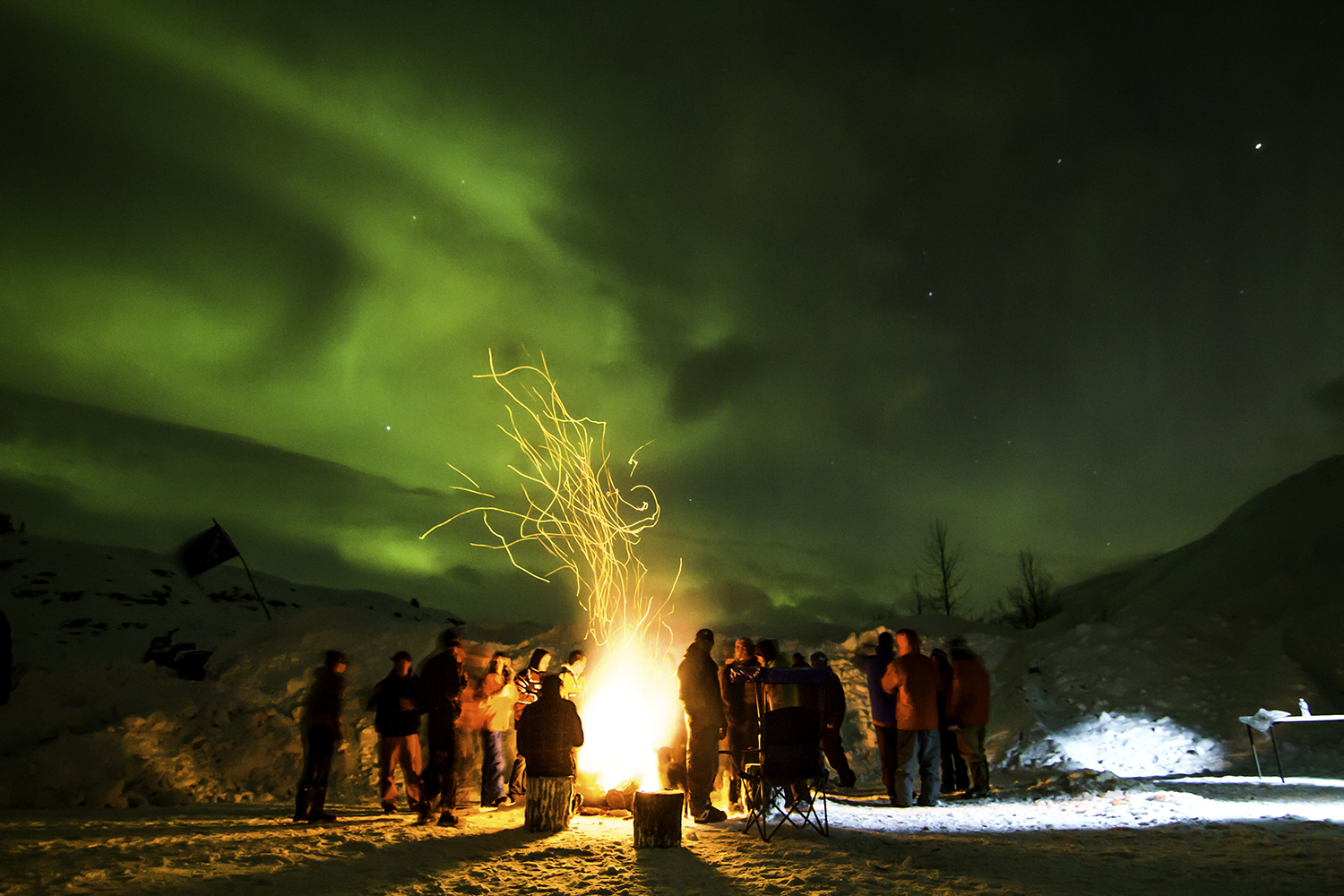
Tailgate participants purchase tickets to the event for a few hundred dollars, in exchange for a maintained lot in the Pass that provides trash service and bathrooms. Daily avalanche conditions are posted every morning. There is an area where people can connect to WiFi. At night, there are concerts by local Alaskan bands. And, yes, there are fireworks.
So, who are these people who go to Tailgate?
There’s a carpenter from Switzerland, Pirmin Wey, a former Master Sergeant of the Air Force, Nick Campiglia–he drives down every spring from North Pole. There’s Julia Dujmovits, an Olympic gold medalist from Austria, whose dream was to snowboard in Alaska. She found her way to Thompson Pass through Tailgate. There’s eight time Winter X-Games’ champion Nate Holland, Eric Webster, the director of events for the United States Ski and Snowboard Association (USASA); Brad Jay, an Olympic Games announcer. And others like Pam Robinson who has been back 6 years in a row. Her first year at Tailgate she spread her son Aaron’s ashes on a mountain peak above the event. He died in a snowboard accident in Chile in 2011. Aaron loved Tailgate and referred to Thompson Pass as his second home.
And then there’s Sarah Carter, with the Alaska Avalanche Information Center. Last year she stayed in the Tailgate lot with her husband Pete and their kids. She runs the snow safety classes during the event. I remember one snowy night teaching her son Chance how to light fireworks. It reminded me of when I was a child in the backcountry of Alaska.
“I am most proud of the positive impact this event and this place has had on people who come to Tailgate. Their dedication to the event has been nothing short of remarkable,” reflects Sullivan.
“I get pictures emailed to me of Tailgate Alaska tattoos and babies who were intentionally conceived during our event. If this was about the money, I would have stopped a long time ago. It was not started with the intention of making money and certainly 10 years later profit is not what keeps Tailgate going. It’s the people. When I see a local kid from Valdez showing off his backyard to Olympic medalists and X-Games champions, I know that there is value in that.”
***
Will the 10th anniversary of Tailgate Alaska take place this spring? Of course it will, in one form or another. Perhaps the hysteria of these letters will prevail and Tailgate’s land use permit will be denied. But that won’t stop people from coming to Thompson Pass. The only difference is, will they have a parking lot to stay in with bathrooms and a dumpster? Even the DNR recognizes the good that Tailgate does for the area.
In a conversation I had with Clark Cox, the Manager of the SouthCentral Regional Office of the DNR, he said that Sullivan is one of their most compliant permittees and, over the past nine years, they have had very few issues with the event.
Chris Moulton, a Valdez local and member of the city council, said this about the public perception of the event: “Tailgate has cleaned up multiple times, but I would argue that a lot of the garbage is from locals at the free camp across the street and from other winter tourists in the Pass that camp out there during non-Tailgate times.”
Professional snowboarder Mike Basich is someone who has returned to Thompson Pass almost every year since 1995, when he competed in the King of the Hill. In his eyes, Thompson Pass is cleaner and more structured now than it ever was in the past. He sees Tailgate as a positive force in the area. Riding in Alaska isn’t always straightforward and the event provides a proper introduction for newcomers.
“There was a lot of chaos and a lot of looseness in the old days,” Basich says. “What I get out of Alaska now is a lot of just being up there. Some of it’s about riding. The majority of it is about being in the rawness of Alaska.”
Could Thompson Pass and the mountains of Alaska be opened up to the recreational class, the proverbial ski bums and snowboard dirtbags? Or, was its future to forever remain in the hands of the professional athletes and the rich who spend weeks at a time in lodges with helicopters flying them to peaks with untouched powder? Over the course of 9 years, I think you can safely say that Sullivan succeeded in opening up the backcountry of the Chugach to an entirely new class of tourist.
Sullivan says, “you don’t need a pro snowboarder to declare these mountains the best in the world and I would argue that, from a marketing standpoint, having a regular Joe talk about his experience in the Chugach mountains resonates a lot more with the general public than say a person whose whole career depends on them being extreme.”
Dustin is the National Partnership Director at Tailgate Alaska and a freelance journalist. He can be reached at dustinhjames907@gmail.com.
By Frank Murkowski Opinion Is the threat to Alaska real? I believe it is. The continuing conflict involving Iran is

Farmers markets set to open June marks the beginning of freshly grown Alaska produce showing up around the Mat-Su

By Kyle Wilkinson For the Frontiersman The Susitna Valley Emergency Preparedness Fair will be held at the Willow Community Center

By Tim Bradner For the Frontiersman Palmer’s Museum of History and Art hosted 30,000 visitors and 406 tour