Retiring teacher, coach urges Colony grads to ‘find their 68’
By Jeremiah Bartz Frontiersman.com A football coach using a hockey reference as the centerpiece for his keynote address may


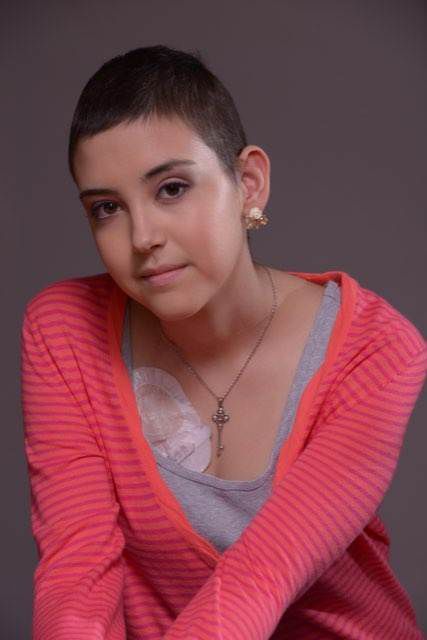
On October 26, 2011, Darlis Meyer got the news every parent dreads but never expects. Her 15-year-old daughter Katie was diagnosed with osteosarcoma in her left tibia, a particularly pernicious cancer that the family would spent the next four-plus years fighting until Katie died in her mother’s arms, surrounded by family on January 28, 2015, three months after her 18th birthday.
It was a torturous experience for mother and daughter alike, and when it was all over, Darlis not only suffered the passing of her daughter; it was the end of four years of hospital trips, flights to Seattle, bucket lists and hope, all of which cost a great deal of money. She had received some financial assistance from the Northwest Sarcoma Foundation, $500 a year that didn’t go terribly far in relieving expenses, but was appreciated all the same.
“Finances get tight; your bills go up and your income goes down,” Darlis said. “Some organizations in Seattle helped us out and when we came home we continued to help those organizations. But a couple of years after she died, I thought, Alaskans are pretty particular about where their money goes; we want to help each other. So I opted to create our own nonprofit that would help Alaskans only. The organization we had worked with had been specific to a particular cancer, but this one is for all cancers, for all Alaskans.”
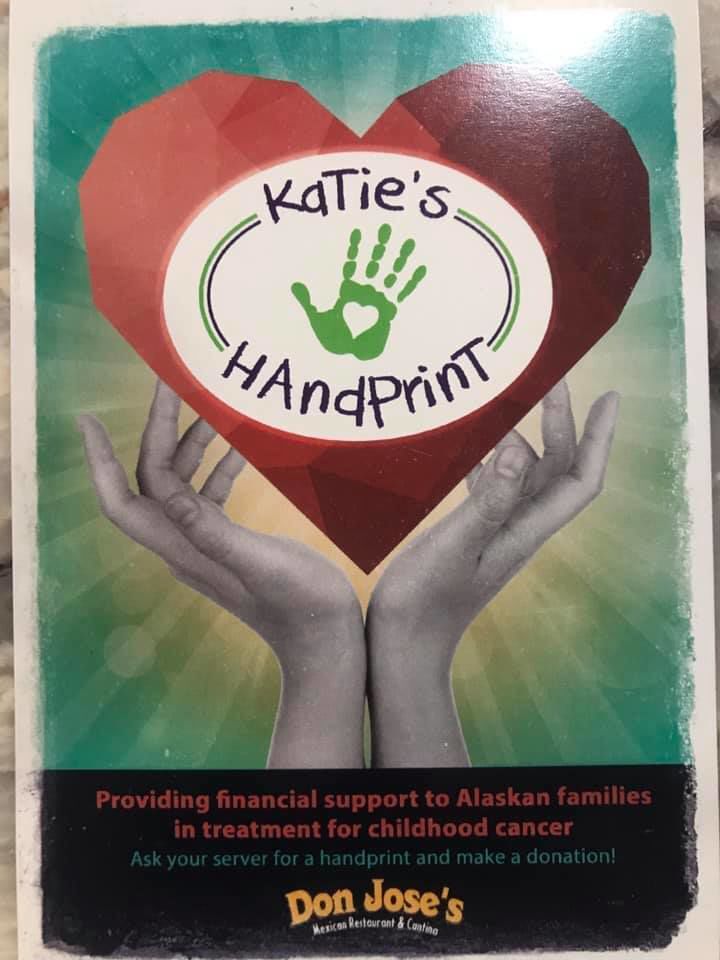
So was born ‘Katie’s Handprint’, now a 501c3 that, to date, has helped 18 Alaskan families defray costs with an annual payout of $750.
It all began with a motorcycle ride fundraiser.
“It was a success but it was getting increasingly difficult to get sponsors and participants,” she said. “I had this feeling we could do so much more than this small sarcoma niche, so I talked to a few of the friends who’d help set up the ride and we decided we wanted to do a thing on our own for all cancers for all kids in Alaska.”
Katie’s Handprint earned its nonprofit tax status in August of 2018, and currently it provides a grant of $750 annually to those who apply, and are referred by a social worker who verifies the authenticity of the case and establishes the need.
“We want to increase that with more donations and sponsorships but we don’t want to be turning anyone away,” Darlis said. “It’s very basic right now. We don’t want to diversify and do a bunch of different things. We keep it simple and as our fund grows what we offer grows each year.”
Darlis said there are about 45 new cases of childhood cancers per year in Alaska. Being in Alaska — and especially being outside of the Anchorage metropolitan area — means a lot of flights, a lot of hotel rooms and expenses that can be bottomless.
“You can’t work full-time and have, in my case, a terminally ill kid, so we found that it was a hole in assistance,” Darlis said. “Some of it is travel, some of it is so many meals away from home, some of it is my reduced income — car payment, insurance still needs to get paid because the treatment is going to end. Either the child doesn’t make it and the treatment ends, or they get better and treatment ends and life is still happening around you. You have to somehow maintain that without having to file for bankruptcy or lose your home. Unfortunately, that happens far too often. $750 a year is not going to take care of that, but it will fill a little bit of the gap now.”
Darlis said that starting up Katie’s Handprint not only helped Alaskan children and their family’s, it helped her cope with her devastating loss.
“It took something that was just unimaginable and horrific, and as bittersweet as it is being involved, it’s hugely cathartic,” she said. “It took something horrible and made it into something positive. I had been blissfully ignorant of how many kids have comments. I’d see the St. Jude’s commercials and think, ‘it’s not my child.’”
Darlis said the most important thing a parent can do after their child gets a diagnosis is to reach out to people who’ve experienced the same.
“It’s a horrifying feeling; it’s like a no-man’s land,” she said. “Nobody knows what it’s like. You talk to family and your closest friends and they know you and your child… but you need somebody to talk to to bounce ideas off of.”
Darlis said that talking to other parents educated her about things she wouldn’t have known about otherwise; things like asking the hospital to bring food to your child in a box rather than on plastic trays because the smell of steaming food coming off of those trays makes virtually all chemo patients sick.
“You’ll get through it — one way or another, another day by day, you’ll get through it,” Darlis coaches. “Even if by sheer force of will, you’ll get through it — painfully, but you’ll get through it.”
Darlis said she’d like Katie’s Handprint to add a death benefit that would allow terminal children to spend their final months with greater enjoyment.
“We had a recipient that did die about a month ago, and by the time you’re told your child is terminal, you think, what can I do so they have the best month, two months possible?” she said. “My daughter and I, we did a bucket list. At the time she was 17 and I asked, what do you want to do. A 17-year-old doesn’t know yet all that the world has to offer so she said she wanted to ride the biggest roller coaster in North America so we went to Sandusky, Ohio and rode that rollercoaster. Those are the things that are on your mind when you get that terminal diagnosis, not, ‘shoot, how do we pay for end-of-life?’ We were OK with her; we had life insurance so we weren’t worried about that, but that family from a month ago, they didn’t have that and that child spent the last three months not leaving the house.”
To get the next level in fundraising, Darlis is turning her sights toward marketing, in the hopes of generating a community of Alaskan parents who are suffering as she’s suffered. Darlis said in searching the Internet and social media, she’s found Alaska to be the only state that doesn’t have a bereaved moms group.
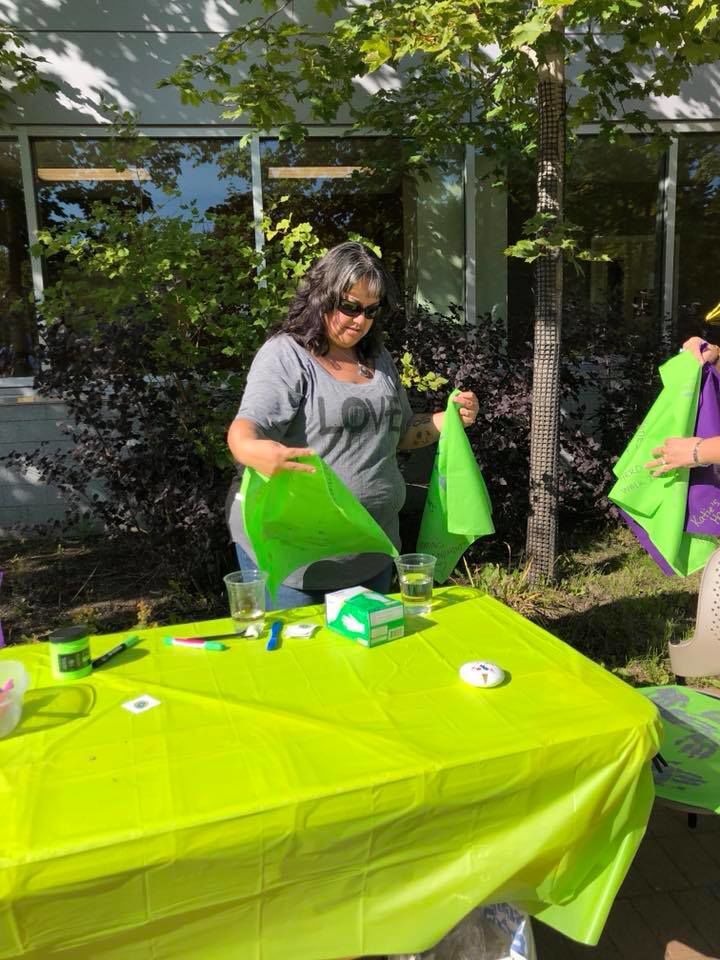
“We do Facebook donations and Facebook has made it amazing in that a nonprofit doesn’t pay a fee. We have a website that people can donate through,” she said. “We have different fundraisers; the motorcycle ride happens in August… 907 Alehouse started a handprint campaign sort of like Shamrocks with MDA where customers would donate $4 or $5 and write their name on handprints that they’d put up at the bar. The Knik Bar in the Valley did the same, and Don Jose and House of Harleys will July through August… If they’re Alaskans, they need to know we’re here to help them help each other. That’s my hope, that we get enough people, the right people and get contributions.”
Despite carrying a full-time job, Darlis doesn’t see herself slowing down anytime soon when it comes to Katie’s Handprint. Maybe she never will.
“It’s a lot of work; we all work full-time day jobs, but it’s worth it,” she said. “It is so worth it.”
By Frank Murkowski Opinion Is the threat to Alaska real? I believe it is. The continuing conflict involving Iran is

Farmers markets set to open June marks the beginning of freshly grown Alaska produce showing up around the Mat-Su

By Kyle Wilkinson For the Frontiersman The Susitna Valley Emergency Preparedness Fair will be held at the Willow Community Center

By Tim Bradner For the Frontiersman Palmer’s Museum of History and Art hosted 30,000 visitors and 406 tour